

Week 3 Fruit of the Spirit: Peace
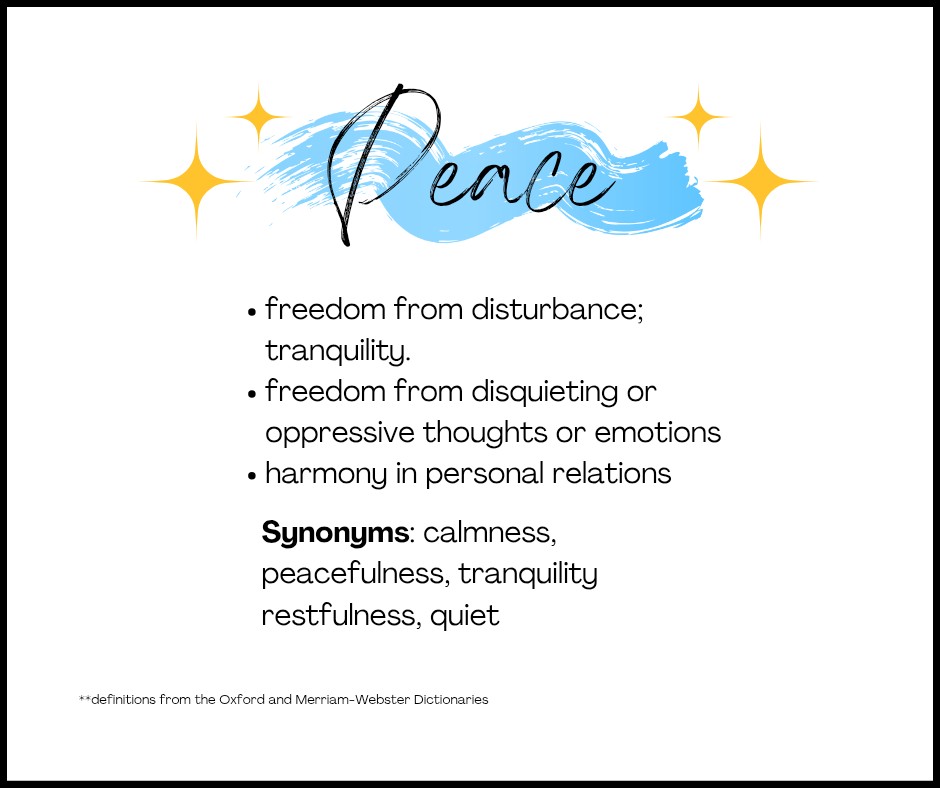
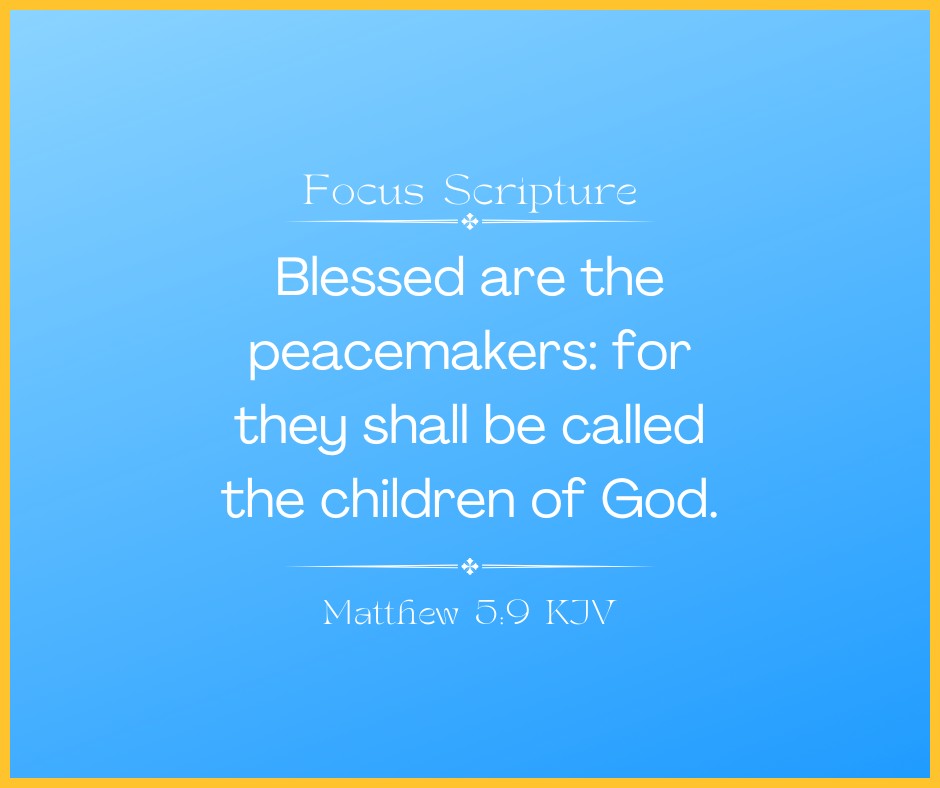

Hello everyone!! This is the third week of our fruit of the Spirit discussion. So far, we have explored walking in love and joy. Today, we will discover how we can be intentional in living a peaceful life. It does take work for some of us more than others. But no matter how difficult or easy it may be, it is necessary for us to be peaceful people. Two areas that are vital for each of us to be peaceful people are understanding that we first must be loving and, two, have a greater dependency on the Holy Spirit. Genuine, not fake, love is needed to have peace. Walking in peace is easier to do when we truly love one another. Also, when we have difficulties or issues arise, we can lean into the Holy Spirit’s guidance on how to maintain peace. Conflicts, whether great or small, can cause breaches in our peace with one another. But we are responsible for being peacemakers, not to harbor any ill-feelings further causing a strain in our relationships. In the above scripture, Matthew 5:9, Jesus is talking with his disciples and discussing the beatitudes. He says those who are peacemakers are blessed and will be called children of God. We are not to be arguers, agitators, or instigators, but as God’s children, we are peacemakers. Additionally, Psalm 34:14 reminds us to seek peace and pursue it. We should make every effort to live in peace, not involving ourselves in trivial disputes or divisive behaviors that further causes conflict. If we claim to be children of the Most High God, we should walk in peace.
In today’s blog, we will explore: having inner peace, living peacefully with others, behaviors that hinder us from walking in peace, and leading by example.
Inner Peace comes from YAH

In order to walk in peace with one another, we must have inner peace. We can not give others what we do not have within ourselves. The inner peace that believers exude comes from YAH. Peace from any other source is a counterfeit and temporary. But perfect peace comes from our Father. When our mind remains on God and we trust in Him, we are able to have peace that sustains us. In spite of the inconveniences, issues, or conflicts that arise, we can remain calm, cool, and collected. We have an inward resolve that gives us the ability to stay peaceful even when circumstances or people want to pull us out of our Godly character. It is important to understand that we will experience times that come to test our capacity to maintain our peace. And, it is up to each of us to handle the situation the right way. During those intense moments, if we are still enough, we can sense the Holy Spirit helping us navigate those times. He will allow us to maintain our inner peace regardless of the outside sources trying to threaten it. The beauty of our walk with Christ is that we have Godly assistance. The same way God has modeled love and has given us joy, He will continue to strengthen us and provide us with the peace we need.
After we have obtained inner peace from our Father, it enables us to more easily walk in peace amongst others.
Living Peacefully with Others

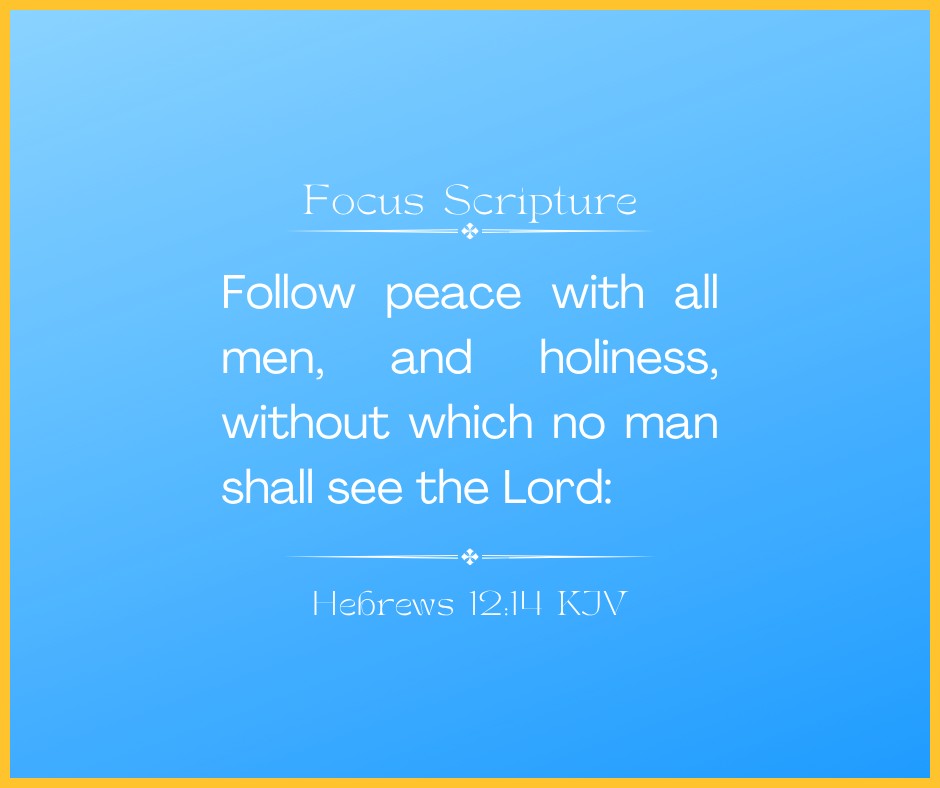
The scriptures listed above show us the importance of believers living peacefully with others and being intentional to pursue after it. We must display maturity. When we are interacting with others, there will be times we disagree or issues arise within our relationships. But it takes two mature individuals to work through any problems to maintain peace within the relationship. There are occasions in which one person may be willing to discuss the matter; but the other person isn’t. Instead, he or she is resistant to talk it through in order to clear up the issue. On both ends of the matter, each person must be open to working through the disagreement or conflict. Disagreements will happen, but how we navigate them has a huge impact on our ability to come to a peaceful resolution. A disagreement does not have to become an argument. No one’s point of view is understood when one or both parties are shouting to get their point across.
That reemphasizes the need for inner peace, so when a disagreement arises, it does not turn into a shouting match with no resolution in sight. We need to remain calm even when we are tested by others during emotionally intense situations. We can not solely look at it from a surface level. We must be mature enough to understand that when problems arise, it is not always the person but a spirit in operation within them trying to cause division in the relationship. That is why we need the guidance of the Holy Spirit to help us navigate these situations. When we do so in our own strength, our flesh gets in the way, and it can cause more harm than good. So, we need to allow the Holy Spirit to help us in these areas of conflict management to ensure we can come to a harmonious resolution if possible.
There may be circumstances where we are intentional in seeking peace after conflict; but the other person may have no interest in reconciling. Romans 12:18 makes allowance for that. We are instructed that if it is possible as much as depends on you to live peacefully with all people. That shows us there will be times that we may not have peaceful relations due to the other party’s unwillingness. But if we can, maintaining peaceful relations should be our first desire.
Behaviors that Hinder Us from Walking in Peace

As we are pursuing a peaceful lifestyle, we must have the awareness that there are behaviors that hinder us from walking in peace. Living a peaceful life requires us to operate in Godly wisdom. In doing so, it will help us to avoid behaviors that further bring conflict and division in our relationships. I want to share some that serve as hindrances. Believers should not be contentious. That means we should not be people who are likely to cause a disagreement or argument. Nor should we exhibit an often perverse and wearisome tendency to quarrels and disputes. Simply put, we should not be the cause or instigator of arguments and disputes. Operating with contention contradicts walking in peace. Throughout the Book of Proverbs, we are warned about displaying contentious behavior and how it negatively affects relationships.
James chapter 3 warns us of the consequences of operating with ungodly wisdom; it is earthly, soulish, and devilish. No good comes from this type of wisdom. The passage of scripture emphasizes how detrimental it truly is. We are given the warning that where there is envy and strife, there is confusion and every evil work. As believers, we should not behave in a way that is envious, nor should we be full of strife. These two behaviors will cause us to be at odds with people we are called to love and be at peace with. We should find contentment in what we have rather than comparing ourselves to others, allowing envy to take root in our hearts. Additionally, we should not allow a minor issue turn into a bitter or angry disagreement (strife). Before it causes a major riff in the relationship, it needs to be addressed, having a level-headed conversation. When two hot-headed people try to have a reasonable discussion, it can be like adding accelerant to a fire. Nothing good comes from it, just more possible damage. It is very likely that no one is going to clearly hear what the other has to say. There would be too many emotions involved, and instead of being led by the Spirit of God, both would be led by their flesh.
Lastly, one major behavior that prevents us from walking in peace is immaturity. It takes maturity to have a respectful and honest conversation with the goal being a peaceful resolution. We have to get over the notion of having to be right and prove our point to the other person. That solves nothing. You may not always be right. Rather, the end result should be lovingly making amends coming to a resolution that is beneficial and healthy for both parties. Immaturity will prevent us from actively listening to what the other person is saying. Instead, we have to be quiet enough to listen and comprehend what is being said. We are not listening just to respond and defend ourselves. That’s why it is necessary to have a discussion when both parties are sober-minded, not amped up full of emotions. Otherwise, that can just result in a shouting match. In those moments, we need to give ourselves time to cool down, relax, and let the Holy Spirit lead us in our discussion. It all goes back to allowing the Spirit of God to lead us, not our flesh. Our flesh will only bring more division and strife, creating a further wedge in the relationship.
Leading by Example
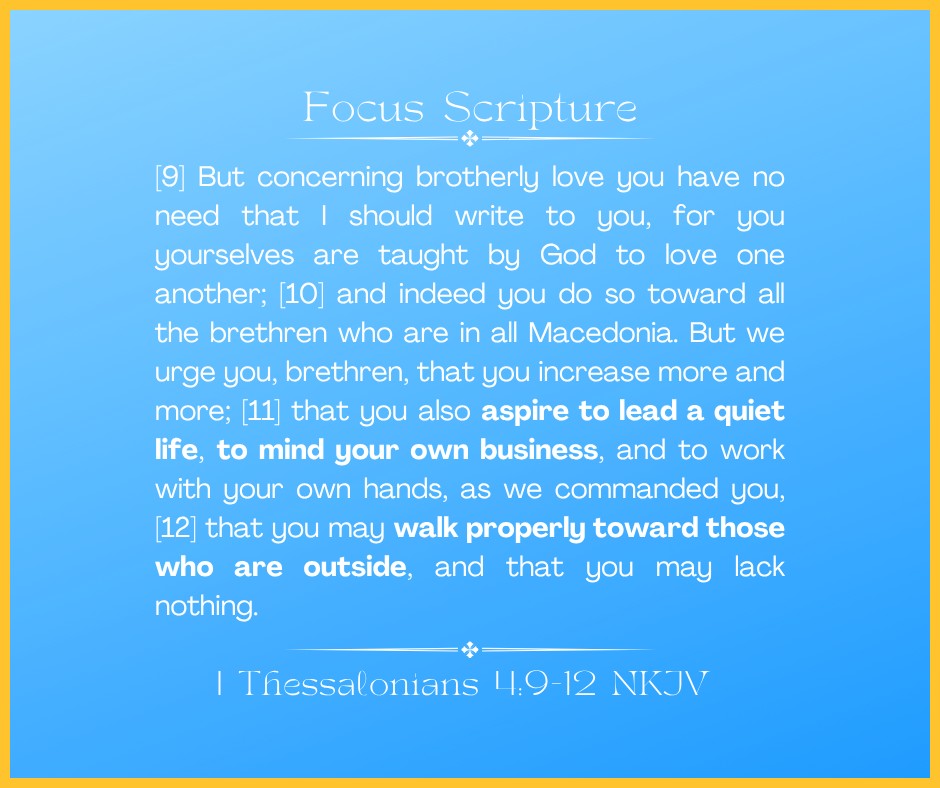
In this last area, I want to emphasize the importance of being an example before unbelievers of how to live a peaceful life. We must recognize that as believers, those who are unsaved are observing how we live. Our life is on display for them to see. We can not proclaim one thing while living another way. The way we behave can either give a Godly example or a lukewarm-compromised example. It is up to each of us to make the decision.
In I Thessalonians 4, the apostle Paul instructs the church of Thessalonica to aspire to live a quiet life, mind your own business, and work with your own hands that they may walk properly. This passage shows us how vital it is to live a Godly, peaceful life before others. The way we live should be a positive reflection of who we belong to. There should be a noticeable distinction in believers when the world observes our lifestyle.
To make it relatable in today’s society, we should not live chaotic lives full of drama and discord. We should not meddle in other people’s affairs. Instead, we should take care of matters pertaining to ourselves and our home. While the world feeds off of sin, pettiness, and relational drama, our behavior should reflect Godly character. As believers, we are responsible for presenting a Godly example for the world to see.
RECAP
- Inner Peace
- Comes from YAH
- Walking in peace starts inwardly
- Living Peacefully with Others
- Seek peace and pursue after it.
- If it is possible, as much as depends on you, live peaceably with all people. (Romans 12:18)
- Behaviors that Hinder Us from Walking in Peace
- Contention
- Strife in words or debate; quarrel; angry contest; controversy
- Envy
- A feeling of discontent or covetousness with regard to another’s advantages, success, possessions, or qualities
- Full of strife
- Bitter sometimes violent conflict or dissension
- Immaturity
- behavior that is not as calm and wise as people expect from someone of your age
- Pettiness, drama, etc.
- Contention
- Leading by Example
- As believers, we should be the example for unbelievers of how to live a peaceful life.
Think About It: Personal Reflection
- Am I intentional about living a peaceful life, or does my life thrive off of drama and discord?
- Do any of the relationships in my life have strife and division? Is it possible to make a peaceful resolution with the other person(s)?
- What example am I displaying to unbelievers? Does my behavior reflect Godly character, or is it lukewarm and compromised?
**Scriptures used from the New King James Bible and the authorized King James Bible
**Definitions used from biblehub.com, the Oxford, Merriam-Webster, and Cambridge Dictionaries
Next Week’s Blog


2 Comments
2 Pingbacks