
Week 7 Fruit of the Spirit: Faithfulness
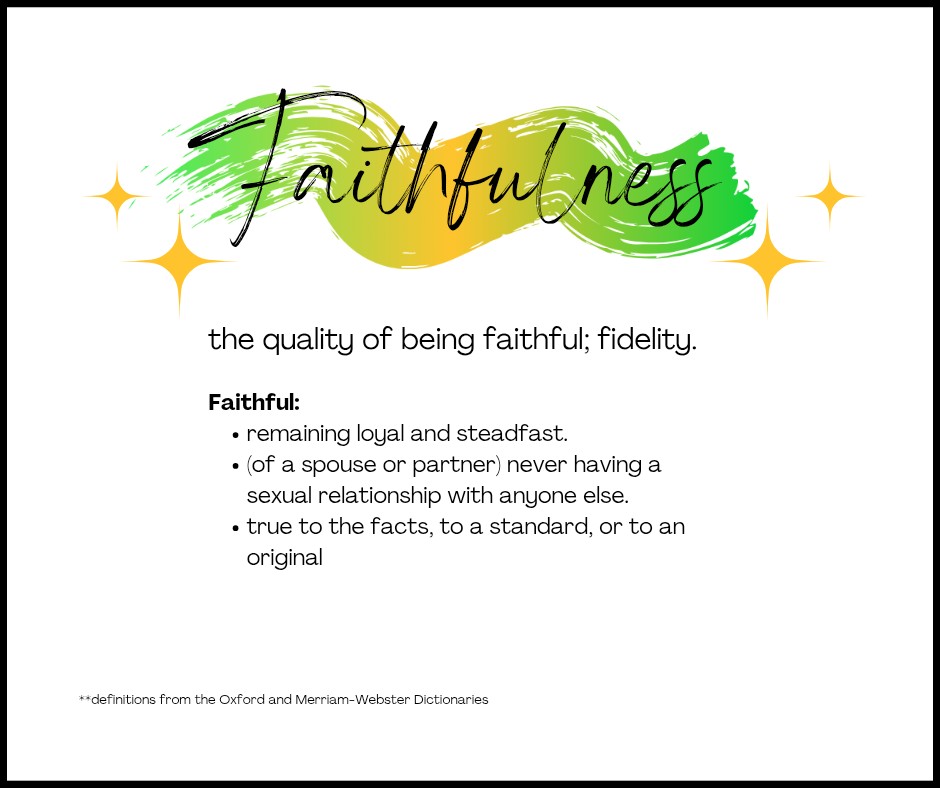
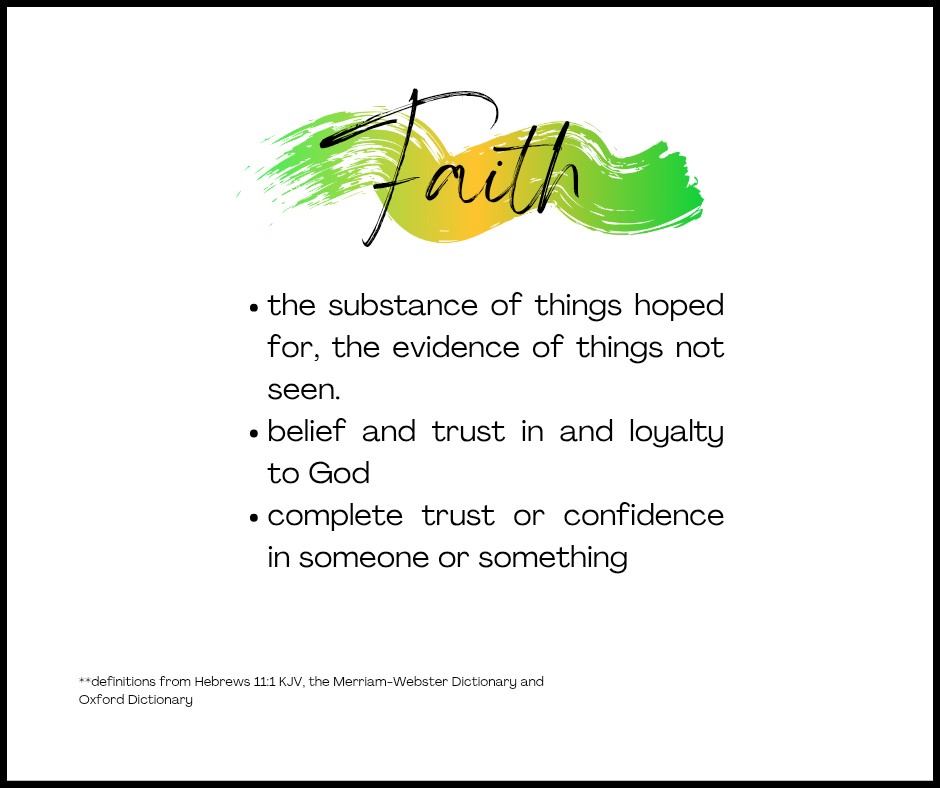

Hello everyone!! I pray the past 6 weeks have been beneficial in helping you cultivate the fruit of the Spirit in your lives. As believers, we should examine ourselves to pinpoint areas where we may be less fruitful. With the help of the Holy Spirit, He enables us to produce more fruit. As well as when we abide in Christ and He abides in us, we are capable of bearing fruit. It is important for us to recognize our need to remain in Christ in order to produce all nine spiritual fruit.
In today’s blog, we are exploring the fruit of faithfulness. We will examine Hebrews 11, which is commonly called the Hall of Faith. Within this passage, we will highlight 5 faith figures who are listed in the Book of Genesis and discover what we can learn from each of them.
5 Faith Figures
(1) Abel (Hebrews 11:4, Genesis 4:1-10)
Our first faith figure is Abel. He is the secondborn son of Adam and Eve. In Genesis 4, he is compared to his older brother Cain. Abel was a shepherd (keeper of the sheep), and Cain was a farmer (tiller of the ground). At a certain time, the two brothers each brought offerings to YAH. Cain brought some fruit from the ground. Whereas Abel brought the firstborns of his flock and the fat from them. In the text, it shows that God had respect unto Abel and his offering. This meant both Abel and his offering were acceptable in the sight of YAH. But as for Cain and his offering, God had no respect for them. This caused Cain’s disposition to change.
Instead of seeking to present himself and a better offering to the Father, He became very angry and his countenance fell. YAH questions Cain about his response. In doing so, we see how important it is to do well. I can imagine the heart posture behind each brothers’ offering was different. For Abel to give the firstborns of the flock and the fat from them is a sign of giving God the best portion. With Cain, there was no mention of the fruits of the ground being the firstfruits. He may have randomly chosen some fruit with no real thought of giving the best to God.
◇Lessons Learned from Abel◇
What we can learn from Abel is to give God our best. No matter what capacity it may be, we should seek to do what is right and acceptable in the sight of YAH. Though we are no longer offering burnt sacrifices, instead, we should be a living sacrifice seeking to do the will of the Father. When we have the opportunity to do good, we should do so. We should remain faithful to our God and continue to give Him our best.
(2) Enoch (Hebrews 11:5, Genesis 5:18-24)
Our second faith figure is Enoch. We are introduced to him in Genesis 5. He’s the son of Jared, the father of Methuselah, the grandfather of Lamech, and the great-grandfather of Noah. He was a righteous man who lived 365 years before being taken by God to heaven, never experiencing death. His testimony was that he pleased God. [Hebrews 11:5] It is mentioned in verses 22 and 24 of Genesis 5 that Enoch walked with God, signifying a close relationship with the Father. It’s an amazing testimony to not only be in close fellowship with YAH but to be spared from facing death.
◇Lessons Learned from Enoch◇
From Enoch, we see the fruitfulness of walking with God. By his commitment to serving YAH, not only was he blessed, but so were his descendants. He left a legacy of righteousness that was passed down throughout the generations. His example would no doubt be a great impact on his son, Methuselah, who would become Noah’s grandfather. While we may not have the same end result as Enoch, we should have the testimony that we pleased God. By the end of our life, our desire should be to hear God say, “Well done, my good and faithful servant.”
(3) Noah (Hebrews 11:7; Genesis 5:28-32; Genesis 6-9)
After discussing his great-grandfather, it’s only befitting to now explore the faith of Noah. Noah’s genealogy can be found in Genesis 5 and 1 Chronicles 1. In these accounts, I want to focus on the fact that Noah is the grandson of Methuselah– the longest living person in the Bible, having lived 969 years. And, we can not forget that Methuselah’s father was Enoch. Noah came from a lineage of righteous men. But in spite of Noah’s upbringing, he was surrounded by a society filled with wickedness. In the midst of corruption and violence, Noah was found to be just and perfect in his generations. During this time, the sons of God (angels) had taken wives among the daughters of men (women). As a result, they produced hybrid offspring, which were giants (or Nephilim). Due to the magnitude of man’s wickedness and the thoughts of their hearts being continually evil, YAH repented that He had made man and He was grieved in His heart.
The creation that He had made was corrupted and replaced with these hybrid creatures. He sought to destroy man and all living creatures from the face of the earth. But Noah found grace in sight of God. He was given the exact instructions on how to construct an ark. Additionally, God established a covenant with Noah, that he, his wife, his sons, and his sons’ wives would come into the ark to be saved from the impending flood set to destroy all flesh. God instructed Noah which types of animals to bring into the ark and how many of each kind and to gather food for his family and the animals. Noah obeyed YAH’s command, and his family was kept by God during the flood. It rained on the earth 40 days and 40 nights. After the waters receded, the ark landed on Mount Ararat.
Once the ground was dry, Noah, along with his family and the animals, went out of the ark. He built an altar unto YAH and offered burnt offerings from every clean beast and bird. God was pleased. He blessed Noah and his sons, instructing them to be fruitful, multiply, and replenish the earth. YAH established a covenant with Noah that He would never again destroy all flesh with a flood, neither would there be a flood to destroy all the earth. The sign of YAH’s covenant was a rainbow in the clouds. As a result of Noah’s obedience and faith in God, he was spared from the destruction of the flood. He and his sons were blessed by the Most High for heeding to His commands. Going forward from Shem, Ham, and Japheth, their descendants would replenish the earth.
◇Lessons Learned from Noah◇
With Noah’s life story, we can learn how great of an impact it is to heed God’s command. While society was corrupt and full of wickedness, Noah remained faithful to God. In doing so, he and his family were spared. They did not suffer the same fate as the wicked. Likewise, we should do the same. As we live in a time where wickedness is being accepted and celebrated, we must take a stand for righteousness. Even though we are not building an ark preparing for an impending flood, instead, we are building up our faith to be able to withstand these evil and dark days. It is up to each and every one of us to have faith to endure. In times of weakness, we can call on our Father, who will strengthen us. We must be like Noah and remain in fellowship with YAH. By trusting in Him, we will find safety and reassurance. We will face being ostracized by those around us who continue to promote and/or indulge in sin and wickeness. But that is expected to happen in the lives of believers. No matter the opposition, it is vital that we stay committed to obeying God and completing the work He has called us to do. Don’t allow the allure of sin to draw you away from God; instead, remain faithful to Him.
(4) and (5) Abraham and Sarah (Hebrews 11:8-11, 17-19; Genesis 11:26-32; Genesis 12-25:11)
Our next faith figures are Abraham and Sarah. We first encounter them in Genesis 11. At this time, their names are Abram and Sarai. Abram is from the lineage of Shem and the son of Terah. Sarai is his wife. They are from Ur of the Chaldees. In the next chapter, YAH instructs Abram to leave his country, his family, and his father’s house to journey to a place where God will lead him. God prophesies that He will make Abram a great nation, He will bless him and make Abram’s name great. Those who bless Abram, YAH will bless. And, those who curse Abram YAH will curse. Through this one man, all the families of the world will be blessed. He heeds God’s command, and at the age of 75 he leaves his father’s house in Haran along with Sarai and his nephew Lot. While on his journey, Abram is prosperous. In Chapter 12, the text tells us Abram was very rich in cattle, silver, and gold. It is evident that YAH’s hand was on his life. Regardless of the highs and lows of his travels, he was kept by God.
(Genesis 15) By this point in Abram’s life, he and his wife are childless. But YAH appears to him in a vision. It is foretold that Abram will have a child of his own as well as descendants too numerous to count. Abram believes, and it is counted to him for righteousness. YAH instructs him to make an offering, and Abram obeys. While in a deep sleep, Abram learns the fate of his descendants. They would be afflicted, held captive for 400 years, serving another nation in a strange land. God would judge the nation, and the people would come out with great sustenance. (Prophecy of the Israelites’ captivity in Egypt and their Exodus from the land of Egypt journeying to the Promised Land) YAH made a covenant with Abram that his descendants would be given the Promised Land from the river of Egypt unto the Euphrates River.
After Abram’s encounter with God, he and his wife still have not conceived a child. Sarai, being well past childbearing age, believed she would not bear children for Abram. She suggests that Abram have a child with her Egyptian handmaid, Hagar. He complies with his wife’s suggestion. They have taken matters into their own hands. As a result, Hagar conceives, and this causes conflict within the household between the two women. Hagar gives birth to Ishmael. But he is not the promised child, which YAH prophesied would come from Abram.
By Chapter 17, YAH appears to Abram, who is now 99 years old. He establishes His covenant with Abram that he will be a father of many nations. Additionally, his name is changed to Abraham. This covenant will be unto Abraham and his seed in their generations. The land of Canaan is the promised land for them to receive as an everlasting possession; and, YAH will be their God. The sign of this covenant was male circumcision. All who keep this covenant were required to be circumcised from 8-day-old babies to those who were born in the house or had been purchased with the money of foreigners. In the same way that Abram received a name change, so did Sarai. The name given to her was Sarah. God tells Abraham that He would bless Sarah and foretold of the promised son whom she would birth. She would be a mother of nations, and kings would come from her.
Abraham laughed at the thought of conceiving a child at his and his wife’s old age (99 y.o. and 90 y.o). God reiterated that she indeed will give birth to a son, and his name will be Isaac. Through this promised child, YAH’s covenant would be established to him and his seed thereafter. Even though Isaac was the promised son, Ishmael will still be blessed and fruitful. From him will come 12 princes, and he’ll be a great nation. The promised son, Isaac, was prophesied to be born at the set time next year. Abraham’s response was obedience to YAH’s command. He took all the males in his household and circumcised them. When Sarah learned of the prophetic word concerning conceiving a son, she laughed to herself. Once she recognized the seriousness of the matter and that nothing is impossible for God, she denied laughing about the situation. Just as God said, Sarah conceived and gave birth to Isaac at the appointed time. Through Sarah’s faith, she received strength to conceive and birth Isaac, though she was past childbearing age. She knew God was faithful to do what He said.
Lastly, Abraham’s faith is evident when he was instructed by God to offer his son Isaac as a burnt offering. This was the promised son that YAH had prophesied about, the heir to the promises of God. But now Abraham was being tested to see if he would give his son to YAH as a sacrifice. Abraham was in the process of preparing Isaac to be sacrificed when God intervened. YAH saw Abraham’s obedience, choosing not to withhold his only begotten son. And, in place of Isaac, God provided a ram that was caught in a thicket. So Abraham offered the ram as burnt offering. With Abraham’s willingness, he passed the test.
◇Lessons Learned from Abraham and Sarah◇
With Abraham and Sarah, there’s much that we can learn from them. In the beginning of their story, we see their willingness to follow God when YAH tells Abraham to leave his country, his family, and his father’s house. Abraham departs with his wife and his nephew Lot. While Abraham is faithfully following YAH, he is very prosperous. At one point, he and his nephew have amassed numerous possessions, so much that there’s not enough land for both of them. Abraham and Lot amicably separate from one another. After Lot leaves, YAH makes it known the future plans He has for Abraham and his descendants. We can learn from Abraham that there is a time when separation is necessary. What God was doing in his life, he had to be removed from among his family. There are times in which our environments and the people in them are not conducive for what God needs us to do. They can be stumbling blocks that stifle our growth in God or draw us away from Him. If God has us to separate ourselves, it is important that we follow his instruction.
Next, with both Abraham and Sarah, we see the importance of holding on to our faith until what God promises comes to pass. We saw this with the birth of their son, Isaac. At first, they took matters into their own hands when Sarah gave Hagar to Abraham to conceive a child. The child was blessed by the Most High, but he was not the promised son who was foretold. That seed would come through Abraham and Sarah, not Abraham and Hagar. When God prophesied of Isaac’s birth, it took faith for the couple who were past childbearing years to believe for the word to come into fruition. They had to trust God to see the promise fulfilled rather than leaning on their own understanding. To apply this level of faith in our lives, we need to believe that what God said it will come to pass. What may seem impossible is possible with God.
Lastly, we see how great Abraham’s faith was to willingly offer his son as a sacrifice to God. That requires strong faith that is built by trust in God. For the average person, it would be difficult to wrap our minds around the fact of offering our child as a sacrifice. Even though we are not tested in the same manner, there are other areas that may require sacrifice. It can be our time. There are times that we set apart to commune with God. We are still in which we remove any distractions to be able to hear His voice more clearly. Instead of binge watching our favorite tv show for several hours, we can dedicate time for prayer and studying the Word. In the time we use enjoying entertainment, we can replace it with service. We can look for ways to extend kindness and goodness to others (serving/ volunteering) rather than being wrapped up in indulging ourselves. I’m not saying, never take the opportunity to relax and enjoy certain activities. It can be done in moderation while still utilizing time to serve others.
Also, sacrifice can come in the form of giving our possessions to those in need. We may have clothing, household items, or other possessions that we can donate rather than hoarding them for ourselves. If it can be used by someone else, it is better to freely give it away instead of keeping it.
Brief Summary of Faith Lessons
(1) Abel
- Give with the right heart posture
- Give God our best
- Present our bodies as living sacrifices that are acceptable to God and seek to do His will
(2) Enoch
- Walking in close fellowship with the Father leads to fruitfulness
- Leaving a legacy of righteousness
- Our life’s testimony should be that we pleased God.
(3) Noah
- Remain faithful to God, choosing to walk upright, regardless of wickedness being accepted and celebrated in society.
- Take a stand for righteousness
- No matter the opposition, stay committed to obeying God and completing the work He has called us to do.
(4) and (5) Abraham and Sarah
- Trust in YAH to lead you when He separates you from what is familiar
- Trusting God with the unknowns and uncertainty–Find peace and reassurance in YAH
- Remain faithful to see the promise come to pass
- The conception and birth of Isaac at the set time as mentioned by God
Put it into Practice
- Are there areas in your life that are causing you to struggle with remaining faithful?
- Challenge: Read the story of Joseph analyzing how he remained faithful to YAH and displayed the fruit of the Spirit throughout family conflict, imprisonment, serving in Egypt, and the reunification with his father and brothers. (Genesis 37, 39-50)
Next Week’s Blog


2 Comments
2 Pingbacks