

- Week 1: Walking in Love
- Week 2: Walking in Joy
- Week 3: Living a Peaceful Life
- Week 4: Patiently Enduring as Believers
- Week 5: Extending Kindness to Others
- Week 6: Seeking to do Good Toward Others
- Week 7: Remaining Faithful as Believers
- Week 8: Walking in Gentleness
- Week 9: Exercising Self-Control
Tag: Peace

Week 3 Fruit of the Spirit: Peace
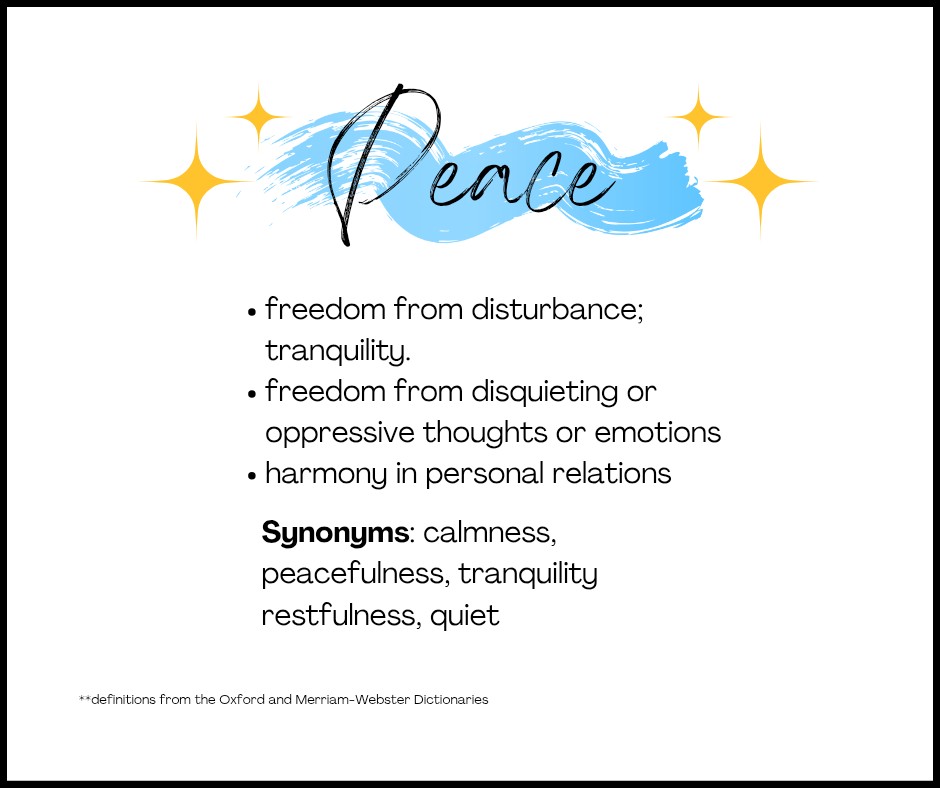
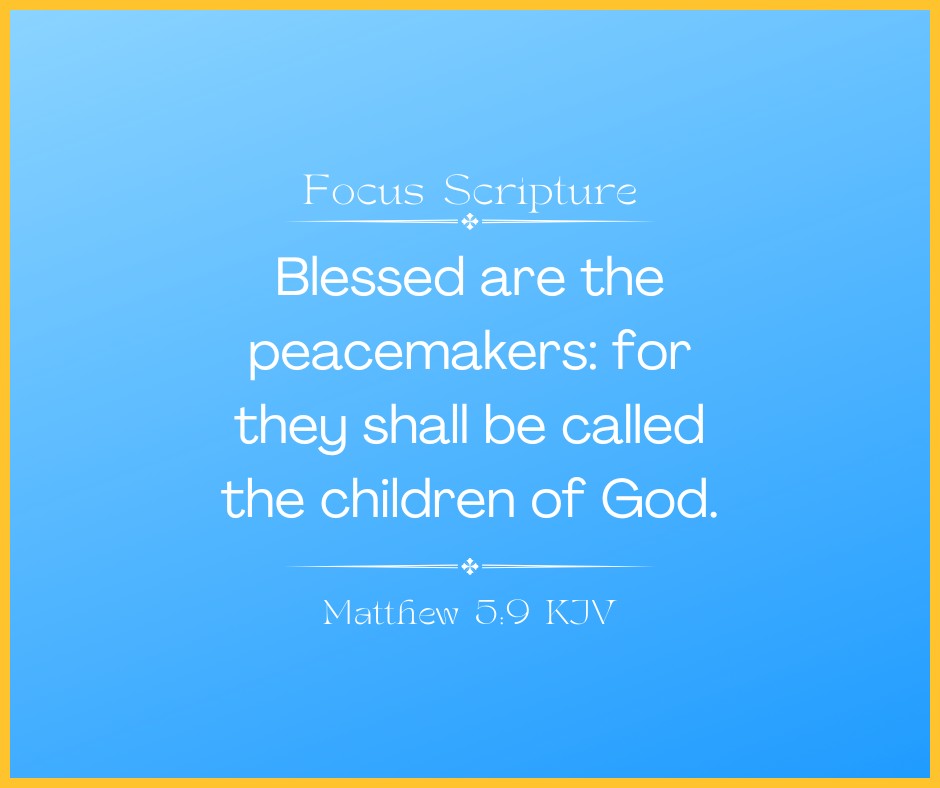

Hello everyone!! This is the third week of our fruit of the Spirit discussion. So far, we have explored walking in love and joy. Today, we will discover how we can be intentional in living a peaceful life. It does take work for some of us more than others. But no matter how difficult or easy it may be, it is necessary for us to be peaceful people. Two areas that are vital for each of us to be peaceful people are understanding that we first must be loving and, two, have a greater dependency on the Holy Spirit. Genuine, not fake, love is needed to have peace. Walking in peace is easier to do when we truly love one another. Also, when we have difficulties or issues arise, we can lean into the Holy Spirit’s guidance on how to maintain peace. Conflicts, whether great or small, can cause breaches in our peace with one another. But we are responsible for being peacemakers, not to harbor any ill-feelings further causing a strain in our relationships. In the above scripture, Matthew 5:9, Jesus is talking with his disciples and discussing the beatitudes. He says those who are peacemakers are blessed and will be called children of God. We are not to be arguers, agitators, or instigators, but as God’s children, we are peacemakers. Additionally, Psalm 34:14 reminds us to seek peace and pursue it. We should make every effort to live in peace, not involving ourselves in trivial disputes or divisive behaviors that further causes conflict. If we claim to be children of the Most High God, we should walk in peace.
In today’s blog, we will explore: having inner peace, living peacefully with others, behaviors that hinder us from walking in peace, and leading by example.
Inner Peace comes from YAH

In order to walk in peace with one another, we must have inner peace. We can not give others what we do not have within ourselves. The inner peace that believers exude comes from YAH. Peace from any other source is a counterfeit and temporary. But perfect peace comes from our Father. When our mind remains on God and we trust in Him, we are able to have peace that sustains us. In spite of the inconveniences, issues, or conflicts that arise, we can remain calm, cool, and collected. We have an inward resolve that gives us the ability to stay peaceful even when circumstances or people want to pull us out of our Godly character. It is important to understand that we will experience times that come to test our capacity to maintain our peace. And, it is up to each of us to handle the situation the right way. During those intense moments, if we are still enough, we can sense the Holy Spirit helping us navigate those times. He will allow us to maintain our inner peace regardless of the outside sources trying to threaten it. The beauty of our walk with Christ is that we have Godly assistance. The same way God has modeled love and has given us joy, He will continue to strengthen us and provide us with the peace we need.
After we have obtained inner peace from our Father, it enables us to more easily walk in peace amongst others.
Living Peacefully with Others


The scriptures listed above show us the importance of believers living peacefully with others and being intentional to pursue after it. We must display maturity. When we are interacting with others, there will be times we disagree or issues arise within our relationships. But it takes two mature individuals to work through any problems to maintain peace within the relationship. There are occasions in which one person may be willing to discuss the matter; but the other person isn’t. Instead, he or she is resistant to talk it through in order to clear up the issue. On both ends of the matter, each person must be open to working through the disagreement or conflict. Disagreements will happen, but how we navigate them has a huge impact on our ability to come to a peaceful resolution. A disagreement does not have to become an argument. No one’s point of view is understood when one or both parties are shouting to get their point across.
That reemphasizes the need for inner peace, so when a disagreement arises, it does not turn into a shouting match with no resolution in sight. We need to remain calm even when we are tested by others during emotionally intense situations. We can not solely look at it from a surface level. We must be mature enough to understand that when problems arise, it is not always the person but a spirit in operation within them trying to cause division in the relationship. That is why we need the guidance of the Holy Spirit to help us navigate these situations. When we do so in our own strength, our flesh gets in the way, and it can cause more harm than good. So, we need to allow the Holy Spirit to help us in these areas of conflict management to ensure we can come to a harmonious resolution if possible.
There may be circumstances where we are intentional in seeking peace after conflict; but the other person may have no interest in reconciling. Romans 12:18 makes allowance for that. We are instructed that if it is possible as much as depends on you to live peacefully with all people. That shows us there will be times that we may not have peaceful relations due to the other party’s unwillingness. But if we can, maintaining peaceful relations should be our first desire.
Behaviors that Hinder Us from Walking in Peace

As we are pursuing a peaceful lifestyle, we must have the awareness that there are behaviors that hinder us from walking in peace. Living a peaceful life requires us to operate in Godly wisdom. In doing so, it will help us to avoid behaviors that further bring conflict and division in our relationships. I want to share some that serve as hindrances. Believers should not be contentious. That means we should not be people who are likely to cause a disagreement or argument. Nor should we exhibit an often perverse and wearisome tendency to quarrels and disputes. Simply put, we should not be the cause or instigator of arguments and disputes. Operating with contention contradicts walking in peace. Throughout the Book of Proverbs, we are warned about displaying contentious behavior and how it negatively affects relationships.
James chapter 3 warns us of the consequences of operating with ungodly wisdom; it is earthly, soulish, and devilish. No good comes from this type of wisdom. The passage of scripture emphasizes how detrimental it truly is. We are given the warning that where there is envy and strife, there is confusion and every evil work. As believers, we should not behave in a way that is envious, nor should we be full of strife. These two behaviors will cause us to be at odds with people we are called to love and be at peace with. We should find contentment in what we have rather than comparing ourselves to others, allowing envy to take root in our hearts. Additionally, we should not allow a minor issue turn into a bitter or angry disagreement (strife). Before it causes a major riff in the relationship, it needs to be addressed, having a level-headed conversation. When two hot-headed people try to have a reasonable discussion, it can be like adding accelerant to a fire. Nothing good comes from it, just more possible damage. It is very likely that no one is going to clearly hear what the other has to say. There would be too many emotions involved, and instead of being led by the Spirit of God, both would be led by their flesh.
Lastly, one major behavior that prevents us from walking in peace is immaturity. It takes maturity to have a respectful and honest conversation with the goal being a peaceful resolution. We have to get over the notion of having to be right and prove our point to the other person. That solves nothing. You may not always be right. Rather, the end result should be lovingly making amends coming to a resolution that is beneficial and healthy for both parties. Immaturity will prevent us from actively listening to what the other person is saying. Instead, we have to be quiet enough to listen and comprehend what is being said. We are not listening just to respond and defend ourselves. That’s why it is necessary to have a discussion when both parties are sober-minded, not amped up full of emotions. Otherwise, that can just result in a shouting match. In those moments, we need to give ourselves time to cool down, relax, and let the Holy Spirit lead us in our discussion. It all goes back to allowing the Spirit of God to lead us, not our flesh. Our flesh will only bring more division and strife, creating a further wedge in the relationship.
Leading by Example

In this last area, I want to emphasize the importance of being an example before unbelievers of how to live a peaceful life. We must recognize that as believers, those who are unsaved are observing how we live. Our life is on display for them to see. We can not proclaim one thing while living another way. The way we behave can either give a Godly example or a lukewarm-compromised example. It is up to each of us to make the decision.
In I Thessalonians 4, the apostle Paul instructs the church of Thessalonica to aspire to live a quiet life, mind your own business, and work with your own hands that they may walk properly. This passage shows us how vital it is to live a Godly, peaceful life before others. The way we live should be a positive reflection of who we belong to. There should be a noticeable distinction in believers when the world observes our lifestyle.
To make it relatable in today’s society, we should not live chaotic lives full of drama and discord. We should not meddle in other people’s affairs. Instead, we should take care of matters pertaining to ourselves and our home. While the world feeds off of sin, pettiness, and relational drama, our behavior should reflect Godly character. As believers, we are responsible for presenting a Godly example for the world to see.
RECAP
- Inner Peace
- Comes from YAH
- Walking in peace starts inwardly
- Living Peacefully with Others
- Seek peace and pursue after it.
- If it is possible, as much as depends on you, live peaceably with all people. (Romans 12:18)
- Behaviors that Hinder Us from Walking in Peace
- Contention
- Strife in words or debate; quarrel; angry contest; controversy
- Envy
- A feeling of discontent or covetousness with regard to another’s advantages, success, possessions, or qualities
- Full of strife
- Bitter sometimes violent conflict or dissension
- Immaturity
- behavior that is not as calm and wise as people expect from someone of your age
- Pettiness, drama, etc.
- Contention
- Leading by Example
- As believers, we should be the example for unbelievers of how to live a peaceful life.
Think About It: Personal Reflection
- Am I intentional about living a peaceful life, or does my life thrive off of drama and discord?
- Do any of the relationships in my life have strife and division? Is it possible to make a peaceful resolution with the other person(s)?
- What example am I displaying to unbelievers? Does my behavior reflect Godly character, or is it lukewarm and compromised?
**Scriptures used from the New King James Bible and the authorized King James Bible
**Definitions used from biblehub.com, the Oxford, Merriam-Webster, and Cambridge Dictionaries
Next Week’s Blog
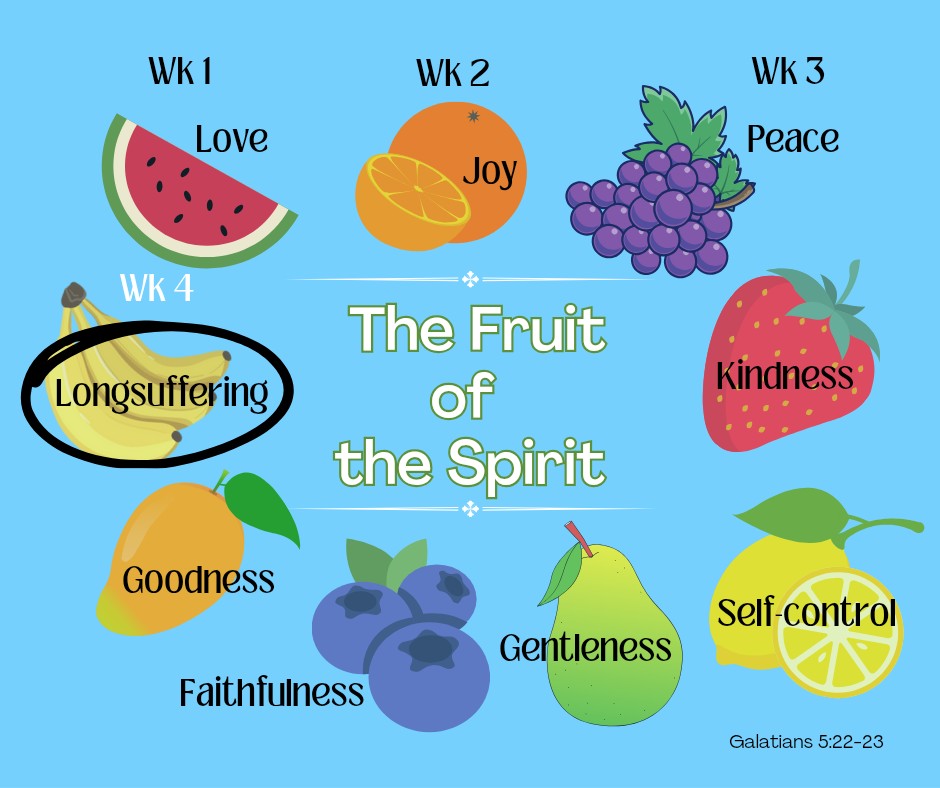



**Sensitive Topic**
This week’s topic hits close to home for me. Over the last few years, I have navigated through many life transitions. It started in early 2021. In the timespan of two months, my life did a complete 180. What I once considered my normal life took a drastic change. In February 2021, my mom was diagnosed with stage 4 pancreatic cancer and kidney failure. The day she received the news, I was accompanying her in the emergency room. That day is forever ingrained in my mind. Hearing that information felt like a nightmare. When the doctors gave their diagnosis, I had to be strong for my mom. I had to maintain my composure and keep it together for her. I remember as they explained their findings, the tears began to flow. But in spite of receiving this devastating news, my mom remained even tempered and level-headed. The doctors admitted Mom into the hospital, and she was transferred to the oncology unit. After being moved to her new room, I stayed with her until visiting hours were over. I didn’t want to leave my mom’s side. All I wanted was to support her and be present every step of the way.
That evening, as I left the hospital room, I kissed her forehead, told her “I love you,” and that I would be back in the morning. I remember crying all the way to the parking lot; and as I made the drive home, I just broke down and wept. I felt helpless. I couldn’t believe that it was cancer that caused my mom’s pain, weight loss, and limited mobility. That night, I couldn’t sleep. My mind was racing, and I had so much weighing on me. I could not believe that my mom had received this death sentence. I would not have much longer with her. It shocked me how much life changes with just one diagnosis.
Mom’s hospital stay lasted almost two weeks. During that time, my cousin and I alternated sitting with her during the day. It was difficult to see my mom in her current state. She didn’t look like her normal self. I was used to my mom’s youthfulness and lively spirit. She may have been in her sixties, but before her illness, she was always out and about, going to the gym three times a week. So, to see her in pain and only have limited mobility that broke my heart. I did my best to maintain my composure around her. I had no other option but to keep it together.
Once Mom was released from the hospital, my cousin and I became her primary caregivers with other relatives and healthcare workers assisting when necessary. When Mom came home, it was joyous to see her in better spirits. In spite of the pain and mobility issues, her personality and character remained the same. Thankfully, that part of her never changed. With taking on the role of caregiver, my priorities shifted. I was still working and occasionally participated in activities in and outside of church, but I wanted to cherish the time I had with my mom.
Knowing my time with her was coming to an end sooner than I imagined I wanted to be with her whenever I could. When I think back to that period in my life, I can say without a shadow of doubt that God was keeping me. He gave me a greater measure of strength than I ever had before. Caregiving is not for the weak and faint of heart. It takes a greater level of patience and selflessness. It entails providing a service to someone, ensuring their safety and overall wellbeing.
I will never forget the day I was washing dishes looking out the window into the backyard. I thought to myself, “When I said I wanted to take care of my mom, this is not what I meant.” As soon as that thought came, I heard God say, “This is the way I want you to take care of her.” I had always envisioned that once I was married and my mom was older, I would have her live with me and my family. But at that moment, I knew God had a different plan. I had to accept that my vision for my life with my mom was not God’s.
It was extremely painful caring for a loved one, knowing they would succumb to their illness rather than beat it. Many nights, I cried after keeping a straight face for my mom throughout the day. Even at times when she was at her dialysis treatment and no one else was home, I would just ball my eyes out. When I couldn’t keep it together, I cried out to God, and He gave me the strength to endure. One thing about me is that there are certain situations where crying is my release, and I am unashamed about it. When I get to a place of vulnerability with God expressing this is too much for me to bear, I find God’s comfort and peace. When I choose to be honest with myself and God, not pretending all is well when it really isn’t, I am able to find the strength and peace I need in Him.
While in my role as caregiver, I was intentional with my music choices. I loved playing the Spotify app to hear my favorite artists. And there were times it felt as if the music I was listening to was handpicked by God just for me. It strengthened my spirit and encouraged me that no matter what I may be experiencing, God was with me. And, not only was He with me, but He was with my mom as well.
Throughout the caregiving period, nothing compared to the time of Mom’s passing. Prior to, I had never been present while a person was transitioning. It was extremely difficult to witness. Witnessing that was a different type of pain compared to the day of receiving Mom’s diagnosis. It was a place of confronting and accepting that the end was here. There would be no coming back from this. No matter how painful it was for me, I was glad to have the opportunity to be with my mom in the end. I wanted to be present with her so that she would not be alone. While I was there for my mom, another relative came to support me during that time. I was grateful because I couldn’t imagine how I would have handled it on my own.
After Mom was given pain meds and anxiety medication to ease her restlessness, she was calmer and went to sleep. Once she was more relaxed, I was able to lay my head on her bed and rest my eyes; but I could never fully sleep. Some time went by, and my cousin alerted me that my mom had stopped breathing. She got the nurse, and the nurse confirmed that Mom had passed. I remember crying, but the first thing out of my mouth was “No more pain.” My heart was broken that she was gone; but I could rejoice that she no longer had to endure suffering. She could rest now.
Adjusting to life without my mom was challenging, to say the least. The dynamics of certain family relationships changed. For the first two years, I went through periods of isolation. I didn’t want to do much, and I did not want to be around many people. The person I could always depend on and talk to was no longer here. Her death brought a deep sense of emptiness. I felt lost, hopeless, and purposeless. It felt like grief was suffocating me. At times, I wanted to give up on life. But by the grace of God, I did not go that route. Even in my lowest moments, he kept me from making any decision that would cut my life short. I can look back at certain times in those two years, and I don’t know how I made it through. When I was just existing, God was keeping me. When I was on the floor curled up in a ball crying, He kept me. It was only God who sustained me.
He didn’t just sustain me, then, but He is still doing so now. Even after my mom’s death, I faced the loss of other loved ones that cut in a different way. I have discovered that dealing with death is not a one-size fits all. With my mom, I had a sense of peace that I did not have with the passing of others. From the period of time I learned of my mom’s cancer diagnosis to her passing, I was in a place of processing what is to come. I was not blindsided by it. But with sudden deaths, especially with suicide there is a lot to process. After my cousin’s death, it wrecked me.
The pain I felt was indescribable. There were so many questions that were left unanswered. I can honestly say it was hard for me to make peace with it. I couldn’t believe she was gone until I saw her in the casket. Even in that, I was unable to make it to the front to see her fully. It was too much for me to handle. Before her passing, I had not been this close to someone who had taken their own life. By the strength of God, I was able to make it through the funeral, giving the prayer of comfort and sharing reflections. That day, God was my strength.
After my mom and other loved ones’ passing, it caused me to look at life through a new lens. I realized just how precious life is and not to take it for granted. It made me aware that learning to adjust to transitions cultivates maturity, builds up my faith, and, more importantly, causes a greater dependency on God.
Finding Peace and Strength in God
Throughout the transitions of the last 4 years, I have discovered that no matter the highs or lows in life, there is something to learn. God is always present and instructing. It is up to us to be still enough to recognize what He is teaching. It takes maturity. I know without a shadow of doubt that God was stretching my faith. During this time, I had to depend on Him more than I ever did before. I discovered the truth in Isaiah 26:3-4, “You will keep him in perfect peace, Whose mind is stayed on You, Because he trusts in You. Trust in the LORD forever, For in YAH, the LORD, is everlasting strength.” To this day, that is one of my favorite scriptures. I noticed that when I intentionally focused on YAH, His peace overtook me. Whatever may have brought stress, worry, or grief was overshadowed by His peace. By acknowledging and exalting God, it allowed the negative feelings to seem minute compared to the vastness of God. If God was able to give me peace, He can do the same for you. That is why it is important to seek Him. Often, when life is challenging, we can stray away or flat out avoid Him. But in seeking Him, we are able to find the peace and strength we need to persevere through life transitions. Do not avoid Him; instead, seek after Him.
Coming to Christ and Casting Your Cares on Him
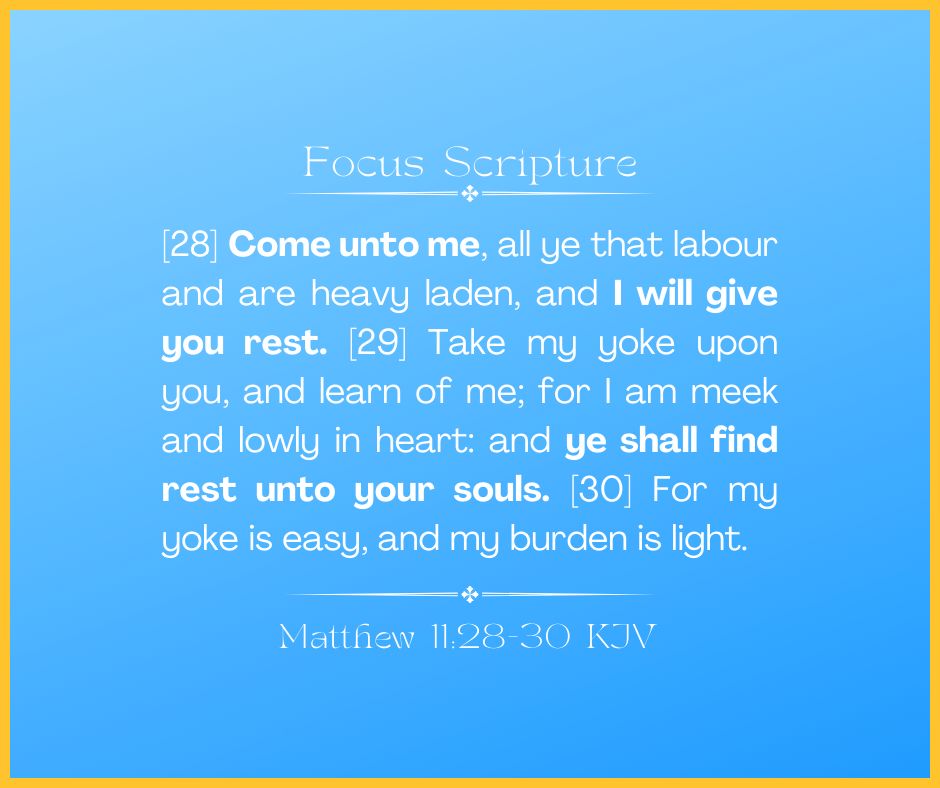
In addition to Isaiah 26:3-4, Matthew 11:28-30 and I Peter 5:7 also shed light on the importance of coming to Christ and casting our cares on Him. Whatever we are battling, we can bring it to Jesus. Whatever is weighing on us, we can cast it at His feet. We have to unlearn carrying what Jesus told us to cast on Him. He has the capacity to handle our burdens, and in return, we find rest in Him. But in order to obtain that rest, we must believe that when we come to Him, He will provide rest for our souls. We must come to Him in faith, not unbelief.
Apply to Our Lives
I don’t know what life transitions you are having to adjust to. It may be dealing with life after loss: whether it be the death of a loved one, loss of a job, or a relationship ending. It could be a change in marital status going from single to married or married to divorced. You may be entering into parenthood preparing for the birth of your first child. You could be taking on the responsibility of caregiver for your elderly parent(s). Or you may find yourself relocating for a job opportunity moving away from your family and friends.
No matter the life transitions we face, we can find peace in God. When we focus our attention on Him and intentionally seek after Him, we find peace. No matter the uncertainty around us, we find stability in Him. He is our Rock. He remains constant and will not fail us. We may not understand what is transpiring or have the full picture. Even when we do not have all the details, we can trust that God will not abandon us to figure it out on our own. But what’s necessary is belief in Him and His Word. We must believe in our hearts that what He said in His Word is true, and it will come to pass. In addition to believing God and His Word, we must depend on Him. We have to come to a place where we acknowledge that we do not have all the answers and need God for direction. To successfully endure life transitions requires dependency on God.
While we are seeking God, trusting in His Word, and depending on Him, we must come to Christ casting our cares on Him. As I mentioned before, we must unlearn carrying what Christ told us to cast on Him. If it’s too heavy for you to bear the weight of it, give it to Christ. We do not get points with God for choosing to bear what we can cast on Him. So use wisdom, give it to God, and in return, you will find rest in Him.
Closing Thoughts
I hope you are encouraged by this week’s post. No matter what you are facing, I pray that God’s peace covers you and your spirit is strengthened. Lastly, a scripture to mediate on to help as you adjust to life transitions is Philippians 4:8-9 (scripture image posted). I pray you have a great day and a blessed week.

You must be logged in to post a comment.