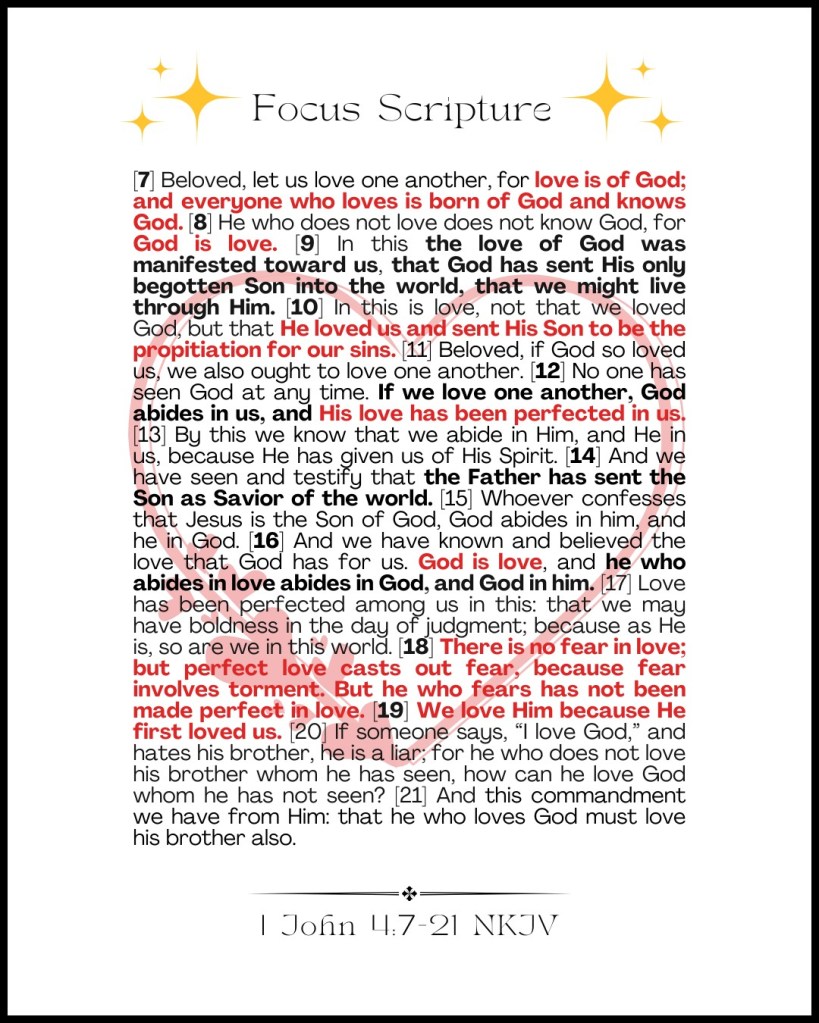
Hi everyone! Regarding this week’s discussion, it is very near and dear to my heart. Throughout my walk with Christ, I have learned to see God’s love in a plethora of ways. In my late teens to early twenties, I struggled to see God as my Father. During that period in my life, I had a very strained relationship with my dad, which negatively influenced how I saw YAH. My perspective of God was misconstrued by comparing Him to the shortcomings of man. As my faith grew, I learned that I couldn’t compare God to man. His nature is not the same. I realized we do ourselves a disservice when we make that comparison. No good comes from it. Instead, it causes what could be a flourishing Father-child relationship to be distant and fear-based. But in reading the Word and personal experience, I could see God correctly. I could come to a place of belief that He is loving, and as His child, I can approach Him. I do not have to avoid Him trying to distance myself from a place of fear. But I can come boldly to Him.
At first, it was difficult for me to grasp the fullness of His love for me. With God’s patience and reassurance, He showed me what real love looked like. When I was finally able to receive God’s love, I was overwhelmed with gratitude, that I am a child of the Most High God loved immensely by my Heavenly Father. I am not unloved or unlovable. This is only part of my story; there is so much more I could share. I will share that seeing God correctly and receiving His love allowed me to extend grace in areas where my dad had fallen short in the early part of my life. While receiving YAH’s love, I could more freely give love to others, but more importantly, I was more inclined to showing it to my dad.
It’s my hope that my story will help those who have struggled to receive God’s love and see Him as their Father. You may not have had a strained or non-existent relationship with your natural father. But through other factors in your life, it can cause you to see YAH incorrectly. After this discussion, I pray you will divorce yourself of any misconceptions and embrace the love God has for His children. In today’s discussion, we will: discuss the depths of YAH’s love, the ways God’s love is displayed, and how we embrace the Father’s love.
The Depth of YAH’s Love
The first area to discuss is the depth of YAH’s love for His children. Romans 5:8 shows believers how much we are truly loved by God. This is one of my favorite scriptures. I often paraphrase it as, “When we weren’t thinking about God, He was thinking about us. While we were living in sin, His love was shown by willingly giving His Son to bear the sins of the world.” And of course John 3:16 is one, if not the most, commonly known scriptures. In verses 16 and 17, we see the benefits of believing in Christ. When we believe that Christ paid the ultimate sacrifice for our sins, we receive eternal life. We are not condemned but granted salvation through Christ. And, lastly in the latter portion of Romans 8, it shows us that no matter the opposition we face, it isn’t great enough to separate us from God’s love. The scripture reiterates that YAH’s love is expressed through Christ. It is vital for those who believe to understand there is no greater love than Christ laying down His life for all.
Even though there are individuals who would deny Him and choose not to accept the free gift given to us. We have to remove the former ideologies we’ve held within ourselves. We may have encountered people who could not love us genuinely, and it was either conditional, transactional, or not at all. But, in order to receive God’s love, we must believe it. It’s a matter of believing God’s Word for yourself. Someone can share the gospel with you. That is an expression of God’s love; but, it is up to each of us coming to a place where you read His Word and believe it is true. It is all about whether you believe or not. That is what we all must consider in our lives.
Displays of God’s Love
Once we’ve come to a place of understanding, believing the depth of YAH’s love, we then can see the various ways that God’s love is expressed. Listed below are some, not all, of God’s characteristics along with scriptures to support them.
God is Merciful
Mercy: compassion or forgiveness shown toward someone whom it is within one’s power to punish or harm (Definition from the Oxford Dictionary)
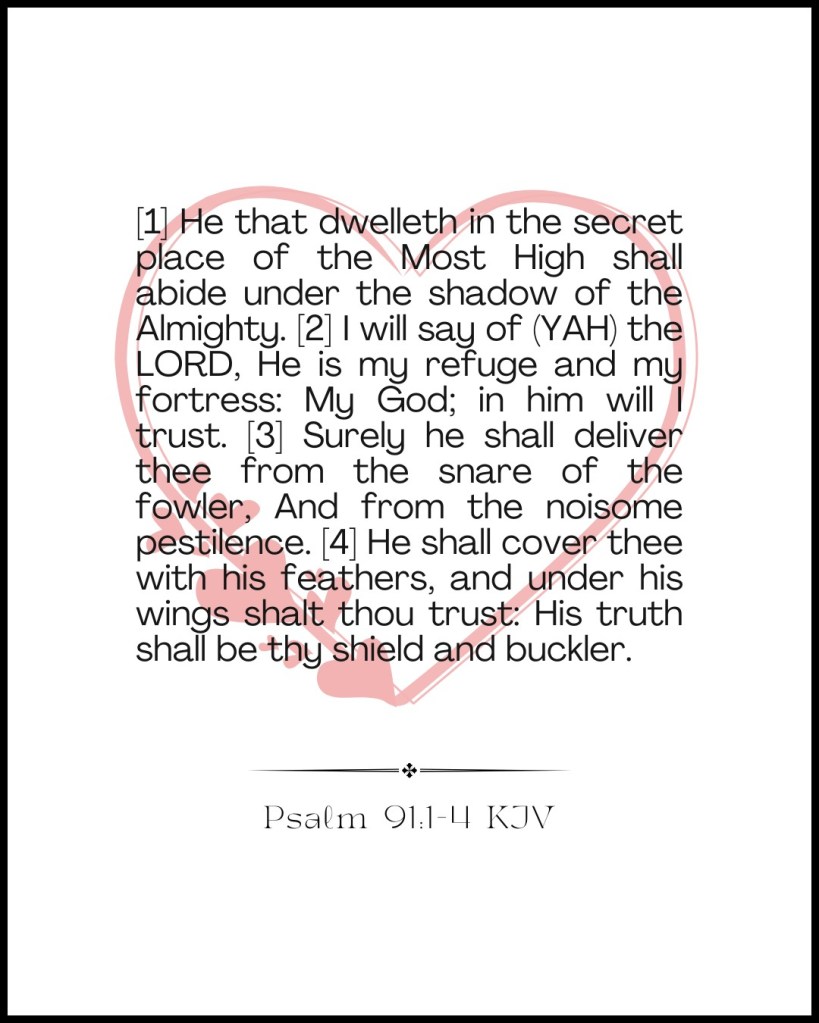
God is our Protector
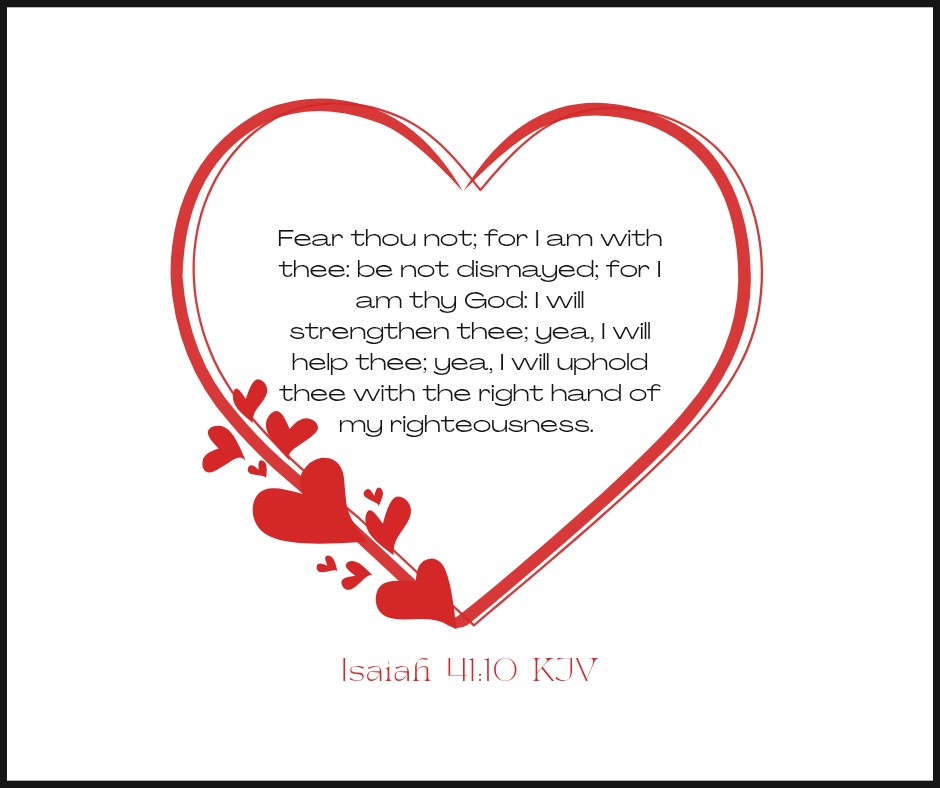
God is our Strength and Sustainer
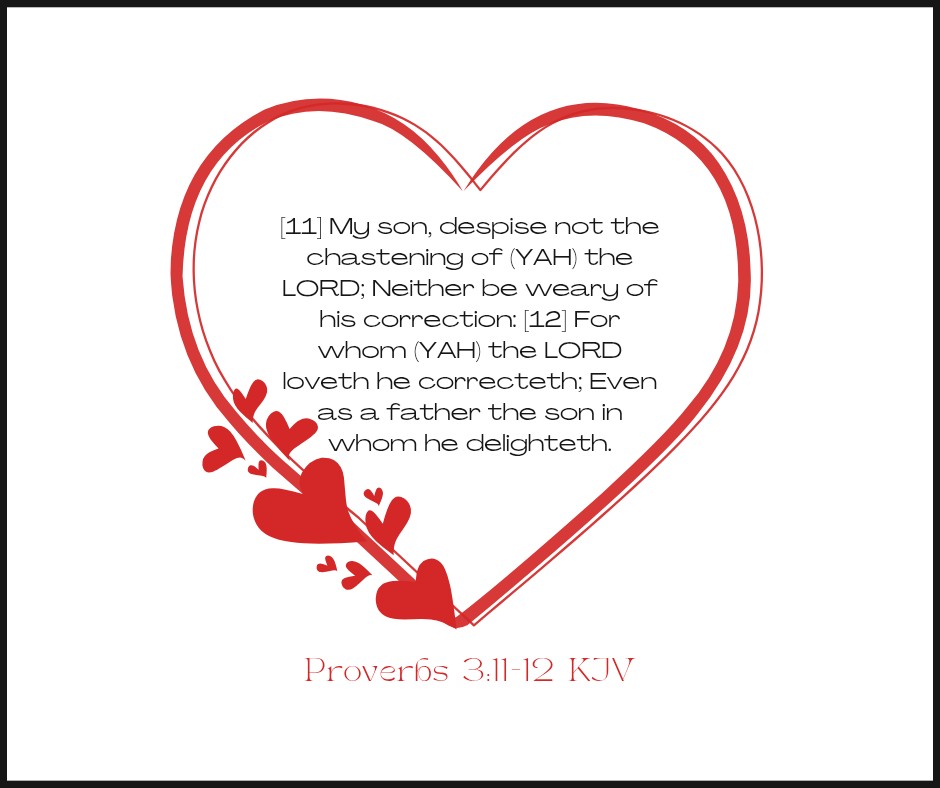
God is our Chastiser
God is our Provider
Embracing the Father’s Love
Now that we have discussed the depths of YAH’s love and some of the ways it is expressed, I hope it makes it easier for us to embrace the Father’s love. We are not orphans, left fatherless. We are sons of God [sonship]. We no longer have to be fearful and avoidant. Instead, we are able to confidently come to our Father and receive His love. Through the Word of God, we discover YAH’s character, which allows us to walk in Truth and remove any lie we once believed. Additionally, as our relationship grows, we are strengthened in our perception of God as Father.
Closing Thoughts
From this discussion, I hope you have gained a better understanding of God’s love and see how it has impacted your life. I would suggest rereading the provided scriptures, as well as discovering others to increase your faith in this area. Lastly, I pray that His Spirit would show you any areas that has hindered you from fully receiving and walking confidently as a child of the Most High God.
**Scriptures taken from the authorized King James Bible and the New King James Bible
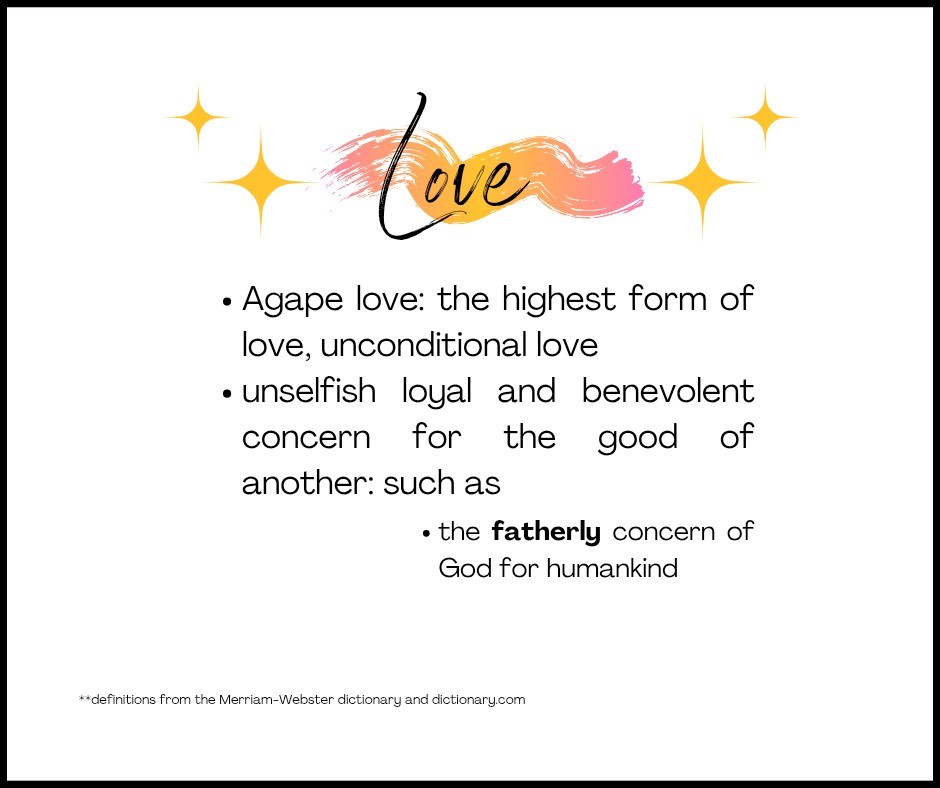
**Definitions from dictionary.com, the Merriam-Webster, and Oxford dictionaries
Hello everyone! I pray you have had a great week so far. It is my hope that The Restored Life blog has been a blessing to you. If so, please share with others and subscribe to stay updated with each week’s blog.
In today’s blog, I want to discuss walking in forgiveness. This is a touchy subject, but it’s necessary to address it. Otherwise, we can find ourselves walking in unforgiveness and reaping the consequences of it. As believers, we can not harbor unforgiveness in our hearts toward others. We must choose to forgive others no matter how big or small the matter is. We can not receive forgiveness from our Father if we are walking in unforgiveness toward those who have offended or done us wrong. Forgiving others is not always easy, but we are required to forgive.
To forgive means we: (1) stop feeling angry or resentful toward someone for an offense, flaw, or mistake, (2) stop blaming or being mad at someone for something that person has done, or not punish them for something, and (3) overlook an offense, and treat the offender as not guilty. With these definitions, we have a clear understanding of what it looks like to forgive. It takes maturity to forgive when our flesh wants us to stay in a state of offense and resentment. I can relate to the feelings that arise when someone says or does something that inflicts pain. That pain may be physical, mental, or emotional. Their actions or words cut deep. Previously, I tried to forgive others in my own strength and was unsuccessful.
But once I invited the Holy Spirit into my situation, then I was able to forgive. When thoughts of the wrongdoing would replay in my mind, I still had to choose to forgive. I could not live in a state of continually reliving the offense. In the Word of God, I am reminded that forgiving others is a requirement, as God has forgiven me. Regardless of what was said or done, I have to give up the right to hold a grudge. I can’t afford to stay offended. Otherwise, that will cause anger and resentment to fester in my heart.
Throughout my adulthood, I had to walk through seasons of forgiveness. This was not just one instance but multiple occasions. In life, we will encounter disagreements, conflicts, and offenses. These things are unavoidable. But when the issues arise, we must respond how the Word instructs us to. It’s not based on our feelings and emotions. We can not try to validate them no matter the situation or circumstance.
I have lived through this so I can attest to the inner battle between the flesh and spirit. They are warring against each other. Your spirit will alert you of the need to forgive, releasing the person and the offense. All the while, your flesh is feeding into the wrongdoing, causing you to walk around, angry, resentful, and offended. Honestly, there were times I held on to unforgiveness for years. I thought I had forgiven, but truthfully, I had not. Through the Holy Spirit’s revelation and counseling, I was able to identify the areas where I was holding on to unforgiveness.
The pain attached to the wrongdoing caused me to stay offended and angry at the individuals. It affected how I interacted with them. But with the Holy Spirit’s leading, I sought to make amends as much as possible given the relationship dynamics. Some came through face-to-face conversations. Others were through letters or some form of messaging. I noticed within myself that making amends or clearing up the matter brought peace. My intentions were not to make the other person feel awful and cast blame. Instead, my desire was to honestly share how their words and/or actions affected me and seek to make peace with the person (if possible). The anger I once felt was gone. Regardless of the person’s response, I felt a release from the negative feelings and emotions I had been harboring. These experiences caused me to be aware that forgiveness is necessary and brings healing. It frees you, and it prevents you from having open doors for the devil to gain access to you.
With unforgiveness comes various spirits that can now easily attach themselves to you. Usually, where there is unforgiveness, there is also offense, resentment, anger, and bitterness. These are only a few spirits that can attach themselves to you. Holding on to unforgiveness is detrimental to our overall well-being. We can not walk in unforgiveness and have the expectation of all things going well in our lives. It is a hindrance in our walk with Christ.
So we must make the decision to walk in forgiveness. In doing so, we can forgive others and ourselves. Yes, it’s not just others; we need to forgive ourselves as well.
Forgiving Others
To successfully forgive others, we must invite the Holy Spirit into the matter. We should not be led by our flesh when seeking to make amends with our brothers and sisters in Christ. Whether the issue is minor or major, we need the Holy Spirit to guide us. Being led by Him will have a more favorable outcome than doing so in our own strength.
Also, we must be mature in handling the issue. This shouldn’t be a time of finger-pointing and casting blame. There is a mature way to explain how the matter affected you without telling the person off or giving them a piece of your mind. That’s why it is important to approach the conversation with humility and love led by the Holy Spirit. Pride and having to be right all the time has to go. There is nothing we have to prove to the other person. The end result should be reconciliation, restoring the relationship (if possible).
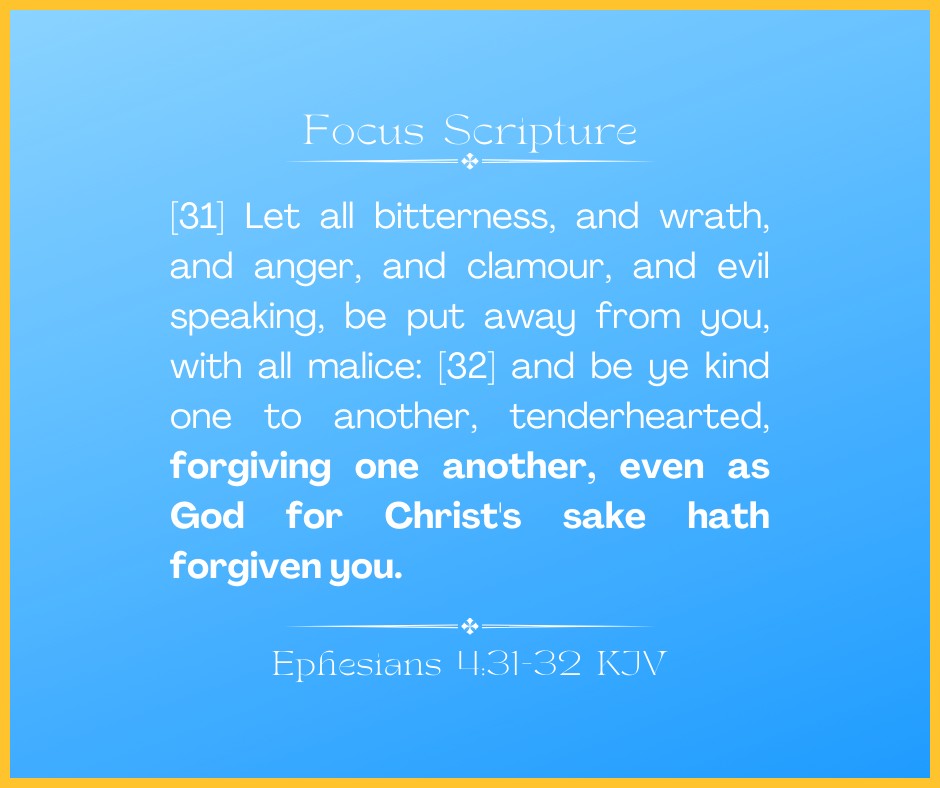
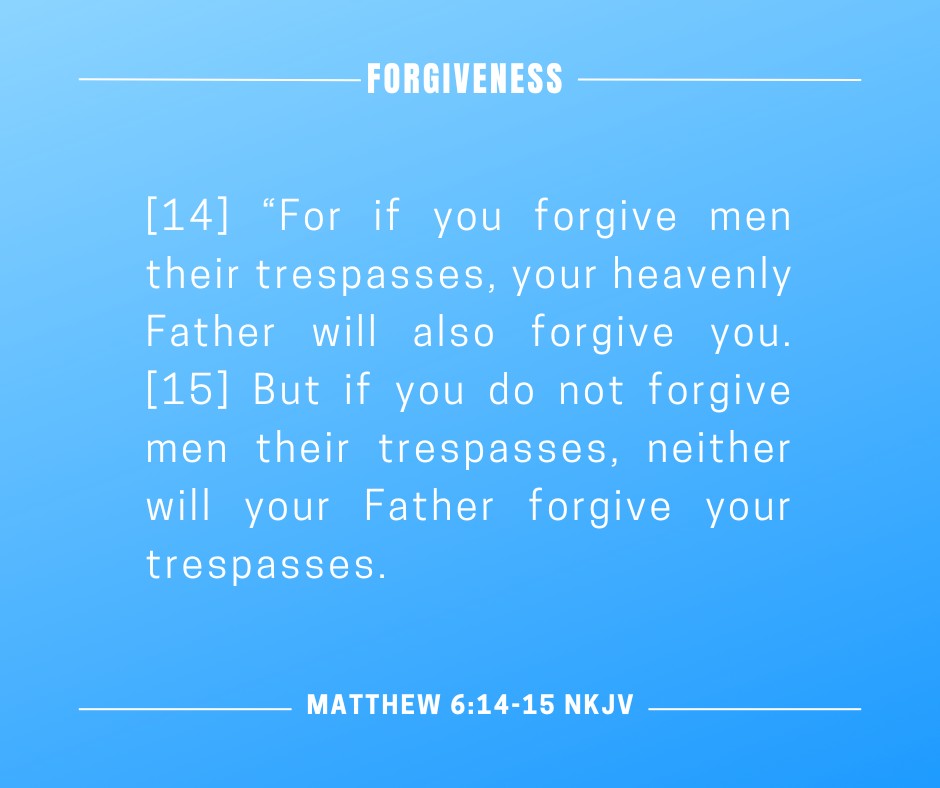
In addition to being led by the Spirit of God and walking in both humility and love, we must know there are consequences if we choose to walk in unforgiveness. It is important to know that if we decide not to forgive others of their faults, mistakes, or sins against us, God will not forgive our sins. We will not receive God’s forgiveness when we are harboring unforgiveness in our hearts. It’s very simple. Forgive others so God does not withhold His forgiveness toward you.
Another consequence of unforgiveness is that it hinders God from hearing our prayers. Before we pray, we need to forgive anyone for anything that they have said or done. We can not harbor unforgiveness in our hearts while praying to God. It is akin to our prayers being blocked from reaching heaven due to a glass ceiling. We may be unaware of the glass ceiling, but nonetheless, it is still present. That ceiling would be unforgiveness. This shows us the importance of clearing up any complaints, disagreements, arguments, and offenses that we have with anyone. But when we choose to forgive quickly and easily, we do not have to be concerned about any hidden unforgiveness in our hearts. If we find ourselves in a state of unforgiveness, we must choose to forgive so there is no hindrance restricting our prayers to God.
Now that we have explored forgiving others, we can move on to discuss forgiving ourselves.
Forgiving Yourself
This particular area we can often overlook in our lives. By this point, we should recognize the importance of forgiving others. But we also need to forgive ourselves. When we fall short and sin or make a mistake, we may battle self condemning thoughts. Even after we have confessed our sins, we struggle with believing we are forgiven. Or rather, we think God holds the transgression over our heads. I know this is not everyone, but I believe there are others who have battled these thoughts. I have found myself viewing my past mistakes and sins from this frame of mind. As I meditated on 1 John 1:9, my way of thinking shifted. I could believe that when I confessed my sins, God fully forgives me. This is not a partial forgiveness to bring it up at a later date. No, He doesn’t hang it over my head, constantly reminding me of what I had done.
That is not in Yah’s character. It is our adversary, the devil, who seeks to condemn us. Once we confess our sin, we are forgiven. The mistake, trangression, or sin is covered under the blood of Jesus. This is why it’s important to understand and believe we are forgiven by our Father. Take captive any self-condemning thought. Don’t allow it to be implanted in your heart and turn into your belief system. Replace the lie with the truth of God’s Word. That is why we must stay girded up with the whole armor of God daily. (Eph. 6:10-17) In doing so, we have the ability to stand against the schemes of the devil. Now that we are prepared for the enemy’s tactics, we can resist him when he sends condemning thoughts. We make the decision to reject them. And, likewise, we can walk in forgiveness with confidence.
Put It into Practice: How to Walk in Forgiveness
Forgiving Others
Move beyond our emotions and feelings–Forgive easily and quickly.
Don’t allow offense, anger, resentment, and bitterness to take root in your heart.
When we experience an offense or have a complaint against someone, be led by the Holy Spirit to determine how to address the situation.
Address the person with maturity–Do not bring in additional persons who may further stir up strife and division.
Approach the person with humility and love–Remove any pride and do not cast blame.
**Ask for forgiveness**: If there is any wrongdoing or offense you have committed against the individual, ask for his/her forgiveness as well. It goes both ways.
Make amends with our brothers and sisters in Christ–Forgiveness opens the door for reconciliation.
It takes two willing individuals in agreement to pursue a fully restored relationship.
Reconciliation is possible if both individuals make the effort to let go of the offense, heal, and truly desire to mend their broken relationship.
Depending on the nature and severity of the matter, it will take time to restore the relationship. It doesn’t always happen overnight.
Choose to forgive whether we receive an apology or not.
We have to forgive even though some people will never admit their wrongdoings or offenses.
Our decision to walk in forgiveness is not based on the other person’s response.
Let it go and release the person.
Once we decide to forgive, let the offense go. Don’t continue to hold it over his/her head.
Forgiving Yourself
Confess your sins to God and believe according to His Word that He has forgiven you.
Once we confess our sins/faults/mistakes, we need to believe we are forgiven and it is covered under the blood of Jesus.
When self-condemning thoughts arise in your mind, take the thought captive, and cast it down.
Do not come into agreement with thoughts that lead to condemnation and lead you to walk in shame and guilt.
Closing Thoughts
I hope this week’s blog will help you on your journey of walking in forgiveness. I know it’s not always easy. But no matter the difficulty, we must choose to forgive. If you are having a hard time releasing the person and what they have said or done, invite God into the situation. He will guide you through it and help you to fully forgive the person. Healing and restoration are possible for you. All we have to do is be honest with ourselves and with Him.
Until next time, have a great week!
**Scriptures used from the New King James Bible and the authorized King James Bible
**Definitions used from the Oxford, Cambridge, and Webster’s 1828 dictionaries
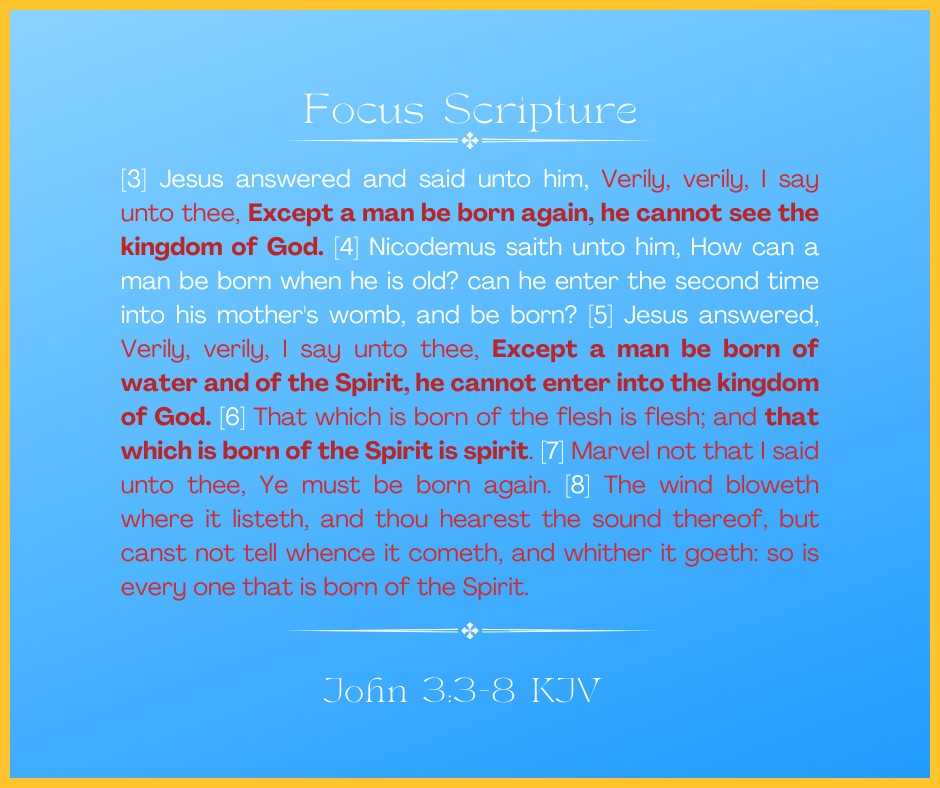
✨️We must be born again (born from above; regenerated: spiritually reborn or converted)✨️✨️In Christ, each of us is a new creation.✨️✨️Faith in Christ ➡️ Children of God✨️✨️The sons of God ➡️ Led by the Spirit of God ➡️ Receive the Spirit of adoption ➡️ Heirs of God and Joint-heirs with Christ✨️
Hello everyone. This week’s topic is very personal to me. From my teens into early adulthood, I struggled with my identity and fully understanding who I am in Christ. I grew up going to church. Throughout my young adult life, I served in various ministries. I was good at being productive and “doing.” I thoroughly enjoyed serving both in and outside of the church. Wherever there was a need, if I had the time and the ability, I had no problem helping out. But in spite of my willingness to serve and help others, I had one area I did not grasp. That area was sonship. I believed that God sent His Son, Jesus, to die for my sins. I believed in the finished works of the cross. I put my faith in Jesus, who I publicly confessed and believed in my heart that God raised Him from the dead. I was even baptized at the age of 11. Nevertheless, I struggled with seeing myself as a child of God. I knew I was saved, but I had a difficult time comprehending God as my Father.
It wasn’t until my mid-twenties that I became aware how my fractured relationship with my natural father affected the way I saw my Heavenly Father. I viewed God through a distorted lens. I began to associate Yahweh with the negative experiences I had with my own father. I was very standoffish and not trusting. I struggled with praying to God. I avoided having open and honest conversations with Him. I had more fear of Him than love for Him. This was not a reverential fear–instead it was a fear of approaching Him or making a mistake dreading the possible consequences. Where the Word instructs us to come boldly to the throne of grace, that we may obtain mercy, and find grace to help in time of need–that was not me by any means. (Heb. 4:16) I was approaching God with timidity or often not at all.
But through counseling, Yah revealing Himself to me and reading the Word, I began to understand the true character of God. With the help of the Holy Spirit, I was able to identify the false beliefs that I had accepted about Yah. Additionally, reading the Word helped me to learn the truth and come out of agreement with the lies. My perception of Yah had changed. I no longer saw Him solely as God the Father, but He was my Father. Confronting and healing from the lies was a process. It didn’t happen overnight–it took place over a timespan of a few years. The healing and restoration that transpired in my life was necessary. I am grateful the scales were removed from my eyes, and I was able to receive the love of the Father–not only receiving His love, but knowing in the depths of my soul that I am His child. During that time, I was overwhelmed by His love. Prior to this, I believed that I was unlovable and it was challenging for me to receive love. I was not affectionate, and I struggled to tell loved ones “I love you.” I was very closed off even though deep down I wanted to be more expressive in my love for others.
I discovered that once I saw my Heavenly Father through the correct lens, likewise, I could see my natural father correctly. It allowed me to forgive my dad for the areas where he fell short as a father. It allowed me to extend grace and no longer hold on to the anger I harbored from childhood. I will tell you from the outside I appeared quiet and reserved. But inwardly, I was full of anger and resentment. I was short-tempered with little to no patience with others. There was so much I held inside, suppressing it for years. I didn’t know how to express myself in a healthy manner. While pursuing a relationship with Yah, it gave me the opportunity to confront the issues I never addressed but had caused me pain for many years. I was able to cry out to my Father and know that He was concerned about me.
In my heart, I knew He heard me and would not leave me in the state I was in. It allowed me to see my life from a different perspective. Whatever I didn’t receive from my dad, I always had in God. He made up for what had been lacking in my childhood and adulthood. It was as though I could see clearly for the first time in my life. I felt restored and loved. The anger and rejection I once felt was replaced with love and fulfillment in knowing that God had been with me all my life. Through the highs and lows, He was walking alongside me–oftentimes carrying me through it. He had been caring for and preserving me from childhood into adulthood.
I shared my story, hoping that it encourages you to see yourself through your true identity in Christ, not who you once were. No matter how our stories started, as born-again believers, we are children of God–once we are saved, we receive the Spirit of adoption and become a son of God. You are not an orphan. You are not fatherless. You are not motherless. You are not abandoned. You are not rejected. Regardless of what you didn’t receive from your natural family, you are adopted into God’s family. You have a Father who has called you His child. You are a part of a spiritual family that truthfully supersedes anything natural.
Today’s topic is for those who are new to the faith as well as those who have been walking with God for many years. No matter how long we have been saved, we need to be reminded of who we are in Christ. There are many things or even people we face on a daily basis that may cause us to question who we are. But whatever and whoever we encounter, it is necessary that we are secure in our identity as a child of God. Also, I want to emphasize walking in the newness of life we have in Christ–embracing our restored identity. Each of us is a new creation. We have a new identity. And we have a new nature. In being made new in Christ, we do not have to live bound to who we once were prior to salvation.
New Creation. New Identity. New Nature.
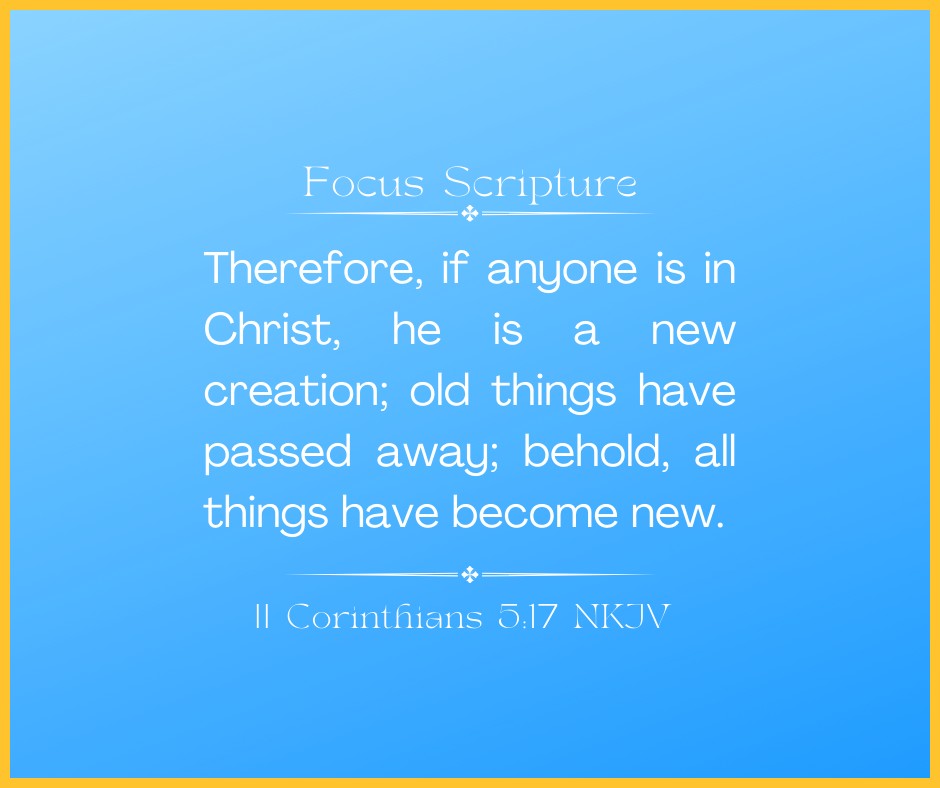
Before we can dive into our identity as a child of God, we must know that when we are born again, we become a new creation. We are regenerated, meaning we are spiritually reborn or converted. At the time of conversion, God begins to work on our inner man. We can see our desires start to change; some are immediate, and others are gradual. This is the beginning of our journey with God. It is important to remember that we are not who we used to be. Our slate is wiped cleaned. The blood of Jesus has cleansed us of all unrighteousness. We have received Christ’s righteousness, and we are in right standing with the Father. We are walking out our salvation and submitting ourselves to the process of sanctification. We no longer have to see ourselves through the lens of our past. In the second portion of 2nd Corinthians 5:17, it states, “Old things have passed away; behold, all things have become new.”
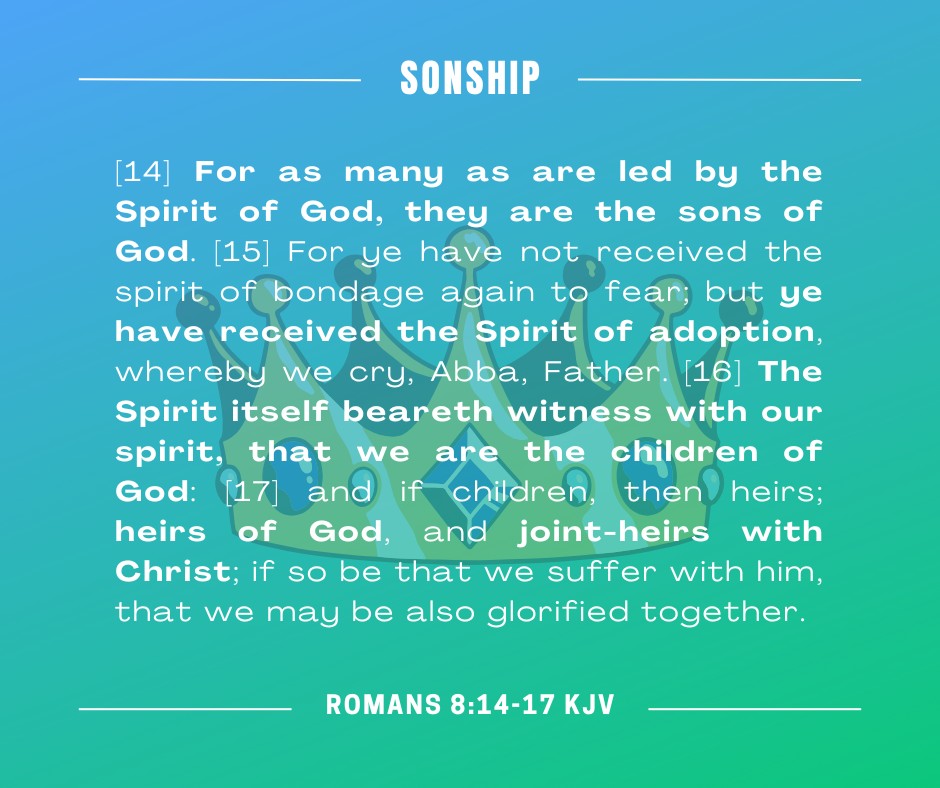
Once we recognize that we’re a new creation, we can embrace our new identity. The Word tells us that we are children of God by our faith in Christ Jesus. We have received the spirit of adoption and sonship. Because of our faith in Christ, we are brought into God’s spiritual family. With our sonship comes benefits. We are counted as Abraham’s seed. Also, we become heirs of God and joint-heirs with Christ.
Additionally, the Spirit of God bears witness with our spirit that we are the children of God. It is spirit recognizing spirit. Those who belong to God are led by His Spirit. Believers are led by the Holy Spirit and sealed with the Holy Spirit. So once we are born again, this newness we have is–we are a new creation; and, we have a new identity as a son of God led by the Spirit of God.
Lastly, being led by the Holy Spirit helps us to put on our new nature. We are no longer bound to our old sinful behavior. We once were slaves to sin, but now we are slaves to righteousness. This requires each of us to make a decision. Will we walk in the Spirit, resulting in our lives being pleasing and acceptable to God? Or, will we walk after the flesh driven by our carnal desires leading us away from Him? This is a daily decision we have to make. My hope is that we choose to be led by the Holy Spirit because the beauty of choosing Him is knowing He will never steer us in the wrong direction. It may be uncomfortable and challenging. It may result in us having to let go of certain things and further exercising self-denial. But in the end, it will ensure we are in alignment with the will of our Father.
No Longer Bound to the Past
With everything I discussed, it is my desire that each of us fully walks in the newness of life made available through Christ. No matter how horrible your past may have been, it is covered under the blood of Jesus. We do not have to see ourselves through the lens of our past. When others want to remind you of who you used to be and what you used to do, you don’t have to walk around in shame and condemnation. Instead, it can be used as an opportunity to share your testimony of how God has restored you and made all things new in your life. Your testimony can help others who are in the same or similar condition that you once found yourself in. It reveals that if God saved you and brought you out, He is more than able to do the same for them.
Lastly, for those who are struggling in their identity, I would encourage you to seek God with your whole heart. We can go to our Father and be honest about our difficulties. There is no reason to conceal it and pretend everything is okay. Yah can handle it; we just need to be willing to express it.
Reading and meditating on scripture helps to reaffirm our identity in Christ. Wherever there is any doubt or questions, replace it with the truth of the Word. As you build yourself up with the Word, it becomes easier to identify any lies the enemy or others have caused you to believe. Once the lies are addressed, we must come out of agreement with them. To fully walk in the newness of life, we need to see ourselves the way our Father sees us.
Recap: Newness in Christ
New Creation
Anyone in Christ is a new creation.
New Identity
Spirit of adoption 》Sonship
New Nature
Led by the Spirit of God, not our flesh
Servant of righteousness (Slave to righteousness-NKJV)
**Scriptures taken from the New King James Bible and the authorized King James Bible















You must be logged in to post a comment.